Sustainability is rapidly becoming a word that companies across all sectors want to use to market their brand. It’s been talked about within fashion for decades, but maybe 2021 will be the year we really demand it from the fashion retailers we know and love?
If you’d like to add sustainability to your style must haves, here are some great places to look:
First and foremost, AmaElla lingerie is beautiful.
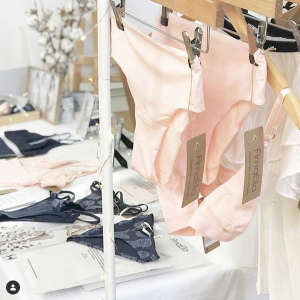
A quick look at their Instagram or website will show you an artful combination of strong and delicate colours and patterns. Deep navy velvet trim on crisp white linen sits alongside delicate florals in lilac and blue and the softest blush pink… and (spoiler alert) there’s red to come. Sounds like I have inside information? I do, but more about that later.
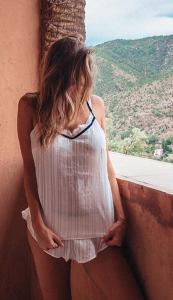
Luckily, the enticing look of AmaElla’s nightwear and underwear is matched by how it feels. You’re going to want to put it on. I’d describe it as the perfect balance between thickness and softness to feel lovely against the skin without compromising on support.
Each piece is designed to make a female body look and feel its best. Careful consideration has been given to front opening bras and knickers with a tie on the side. Everything is flexible and comfortable – no underwires or spiky catches anywhere.
And guess what else… AmaElla have asked me to work with them!
It was such a privilege to take part in a recent shoot for their upcoming product launches and meet some of the people behind the brand, including brand co-founder Lara Miller. Lara has clearly been passionate about the environment for some time. She described how her knowledge of the massive polluting effects of conventional cotton production combined with an eye-opening experience volunteering in Madagascan marine conservation gave rise to the idea of creating organic cotton lingerie.
Super soft and comfy and made from organic cotton
Environmental sustainability
AmaElla’s commitment to sustainability is multi-faceted. Their lingerie is made using GOTS certified organic cotton and prints are created using GOTS certified printing. You can read an explanation of both here.
Also of major environmental impact is the lifespan of each product. It’s shocking to know that according to a report in the Mail Online, most garments are worn as few as seven times each before being sent to landfill or donated to a charity store in the unlikely hope that someone else will treasure our trash.
You’ll be pleased to know then that AmaElla’s garments are created with a view to durability and longevity. From sourcing the best quality fabrics to the skillful design and fitting process and meticulous construction AmaElla promise their goodies are as good as new even after 50 washes!
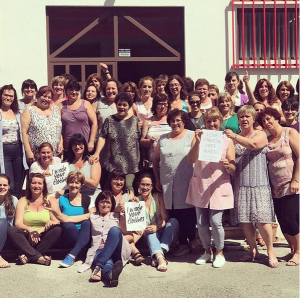
Who made AmaElla’s lingerie? These people… these actual, real, hardworking, skilfull people
Social responsibility
To date, AmaElla have partnered with garment manufacturers in the UK and Portugal, to support the development of valuable skills in safe, properly paid careers. Both partners have a focus on providing opportunities and training to young women.
Body positivity
So, how can I help a brand which seems to have everything so thoroughly sorted? As well as spreading the word here, I’ll be featuring in their social media as well as sharing my favourite pieces and images from the shoot via Instagram. Yes! As well as all their other admirable qualities, AmaElla are totally body and age positive, choosing to promote their brand using a diverse range of models and aiming to make us all feel great about ourselves. To say I’m nervous about seeing my 46-year-old, post-six-baby-body on screen is an understatement! But I love the brand and all it stands for so much that I’m doing it anyway.
The bottom line
AmaElla: sensuous, organic lingerie… thoughtfully designed… well made… with maximum positive social impact and environmental sustainability right at the heart of every lovely piece.
The EU have said there is no further negotiation to be had regarding how the UK might leave. Talks are over, no further concessions are to be made. Plan A – that is to retain trade, abolish EU legislation and shut out migrants – is shut down.
Plan B is Theresa May’s massive compromise deal, also known as BRINO: BRexit In Name Only. But although it guarantees leaving the EU, thus fulfilling the so-called will of the people, it’s just so rubbish that it can’t pass through Westminster.
Oh yeah, the Brexit Bus and it’s boldly coloured lies…
To Plan C… Crashing out, storming off, whatever you want to call No Deal Brexit. Leaving the EU without a deal is an absolute guaranteed disaster according to just about everyone except for those committed to Brexit At Any Cost… remember them? They’re a group who having stopped short of actually saying, “Trust me, I’m a politician” managed to convince 52% of the voting public of a number of fantasies such as the £350m a week that would pour into the NHS post Brexit, the end of free movement of people from March 29, 2019 and the overall concept that negotiating a deal would be easy essentially because in the words of Michael Gove, “…we hold all the cards”.
Hmmmm… there’s a lot of ducking and diving when it comes to discussing these claims, these days. At best they were hugely misguided or ill informed. Maybe there were vested interests, but that’s a whole other story, isn’t it? Whatever the case, none of these claims have been borne out. That’s not my opinion, it’s a fact. If you still choose to believe whatever new myths these people are pedalling, you might still believe Plan C would be in our best interest… FYI that’s called magical thinking, as opposed to critical thinking.
Ok. Plan D. This is my contribution: Instead of trying to renegotiate the non-negotiable (ie Leave)… let’s regnegotiate Remain. That’s it.
As well as having our own currency and being outside the Shengen zone (ok, we knew that already…) we know so much more now than we knew before this whole sorry (insulting, isolating, poorly advised) debate. We know that EU law contains legislation allowing us to “control our borders” but that UK governments haven’t enacted it. If immigration is indeed one of the main factors for Brexiteers wanting to Brexit, let’s look at that.
Our trade deals and tariffs could stay in place, and although we might have insulted our nearest and dearest trading partners, the cost savings and ease of commercial continuity would be hugely positive on both sides.
Goodbye Irish border problems and backstop! Goodbye uncertainty for all the UK citizens living in the EU and the EU citizens who have made their homes and families here in the UK.
What else might we negotiate? Specific legislation? The role of the ECJ? Fishing rights? Benefits? The EU Energy and climate package?
And the happy ending is this: once we’ve renegotiated Remain and can provide absolute clarity for both sides, we can go back to the ballot box and give people a REAL choice. A choice between two real deals. No guessing, no assumptions, just the facts.
—
For the record, I remain a Remainer who is pro-immigration and pro-environment. But I am also a pragmatist. And if there is a way forward that allows for an inclusive and cohesive UK (and something else on the radio, please!) then I think we have to consider it.
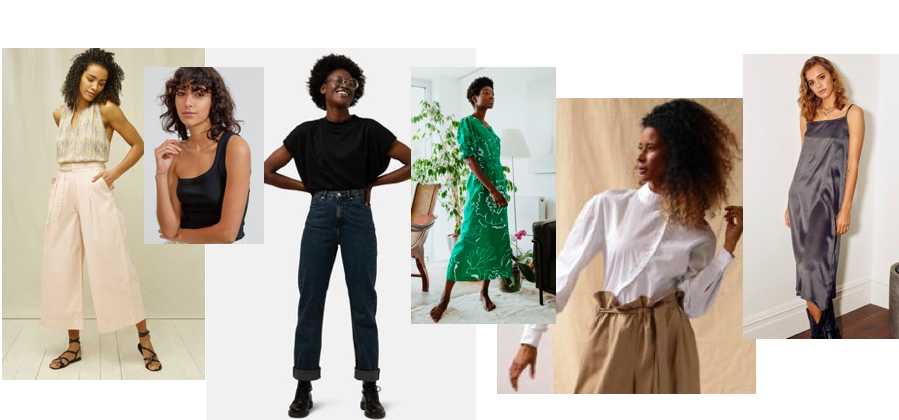
Monkee Genes: everything you could ask for in an ethical denim jeans brand, and very loud and proud about promoting their values.
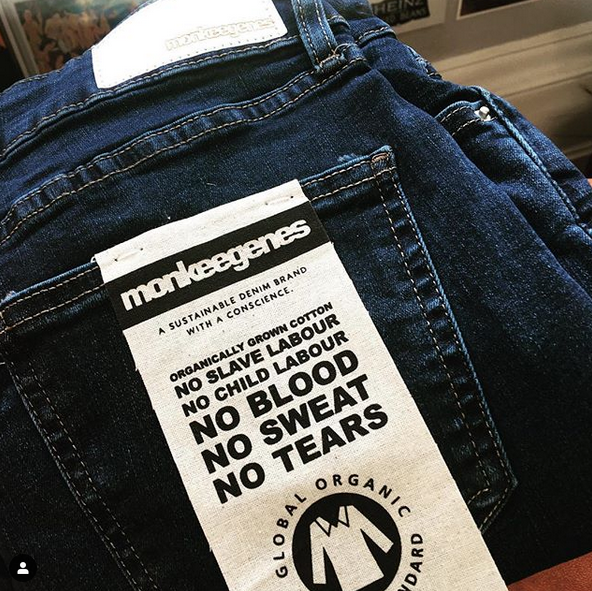
The first thing you see when you open a parcel from Monkey Genes is one big, bold label announcing…
‘No slave labour, no child labour, no blood, no sweat, no tears.’
…doesn’t that make you happy?
Because this is a website about ethical fashion, let’s talk ethics first. Monkee Genes was founded in by Phil Wildbore who “wanted to prove that there is such a thing as looking fashionable whilst supporting sustainability”. Denim garments are notoriously difficult to produce in a social and environmentally responsible way, but by using organic cotton and sourcing GOTS Certified factories, Monkee Genes are able to reduce the negative impact of their products on everyone along the supply chain.
From the cotton farmer who isn’t getting lungs full of chemicals and is able to fairly trade his product; the habitat and biofauna that aren’t getting doused with insecticides; the people who handle, spin and transform the cotton into denim; and those turning swathes of fabric into pairs of jeans… Monkee Genes are putting ethics at the heart of their production.
“We work hard to protect the people who make our clothes, working closely with our factories to ensure safe working conditions and a decent living wage. Our commitment to ethics paired with a innovative fits offers a point of difference to the denim market. All organic, all ethically produced, all fairly made!” Round of applause here please.
Now let’s talk fashion…
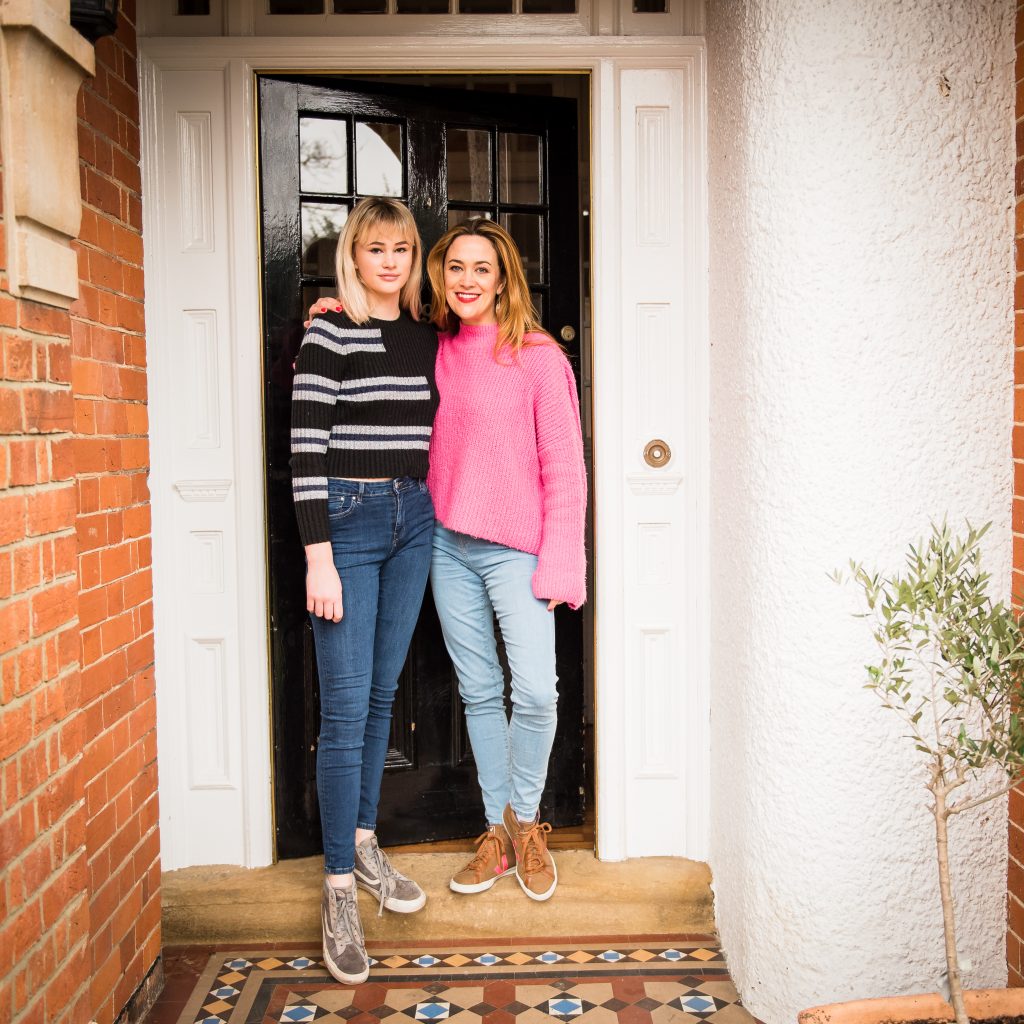
Something for EVERYONE!! I’ve been buying Monkee Genes since I first became properly aware of ethical fashion, in 2010. Their range has increased and improved over that time, and their fabric and fit has remained superb. My one gripe with them was that they didn’t do a high waist… but now they do!! Hello Jane (see above!), the perfect jean in every way!
Whatever ever your preferred fit is, choose from a variety of colours and washes, and make sure they’re perfect for you with either a regular or long cut.
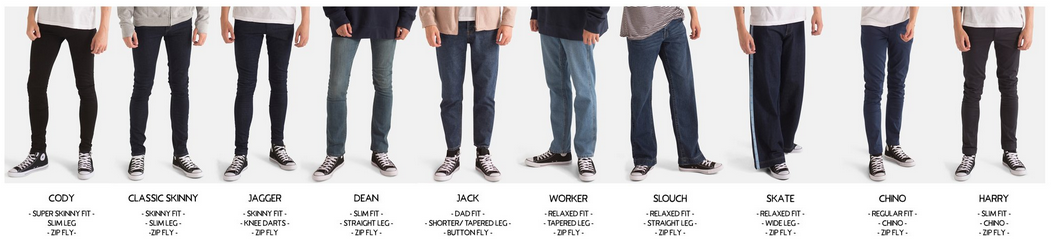
And there’s even more styles for men to choose from…
Pricing is very reasonable too and might even make you question why designer jeans with unknown provenance could possibly cost so much more…
Making your own organic vegan mylk is so easy and so delicious! Whats more you know there’s nothing but the wholesome ingredients you put in, and no heat treatments (like used for supermarket varieties) which might reduce the goodness of your raw ingredients. Making your own mylk also provides you with a nutritious, gluten free by-product – Wholemeal Flour! – which you can then use in baking…
Here’s how you do it:
1 litre Organic Vegan Mylk
Ingredients
1 cup raw, organic nuts (see Method for recommendations)
1 organic date
1 tsp salt flakes
Approx 4 cups filtered water
♥
Equipment
Measuring cup and teaspoon
Jug blender able to finely blend nuts without blowing up
1 litre glass storage jug, or two 500ml jugs
1 large glass jug for straining into (a wide-ish mouth makes it easier to pour and strain into)
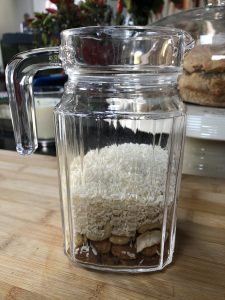
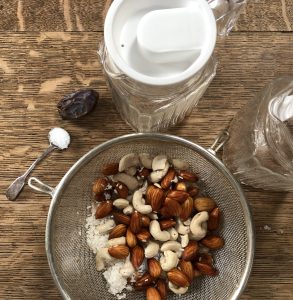
Dry ingredients for Vegan mylk ready to be soaked overnight in the fridge
Method
Measure 1 cup of raw nuts or a combination of several kinds of nuts, seeds, grains and/or a sprinkling of desiccated coconut. Purists can go for a cup of almonds, a cup of cashews or a cup of Brazil nuts, or mix up your recipe by combining with chia, oats, rice, hemp seeds… or any combination. Just pack a cup! My personal favourite is 1/3 cup almonds, 1/3 cup cashews and 1/3 cup desiccated coconut.It’s nutty but without an overpowering almond taste and smell, creamy because of the richness of the cashews and a hint of coconut makes it a little sweet…
Soak those nuts overnight. Put them in a glass container, cover with approx 1 cup of filtered water and leave them in the fridge. This activates, softens and plumps them up.
In the morning, drain off the water and discard.
Put the nuts into a blender with approx 1 cup of filtered water.
Add the date for sweetness and the salt for balance. (You don’t have to if you don’t want to, but I think it makes a sublime taste difference…)
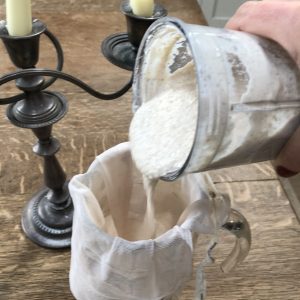
Pour the blended ingredients into a wide mouthed jug lined with a nut mylk strainer
Blend until very smooth. Give it a full 30 seconds and then pause for the bits to settle, then another 30 seconds.
Place nut mylk straining bag in glass jug for straining, and open it out securely over the rim.
Pour blended nut mixture into bag in jug
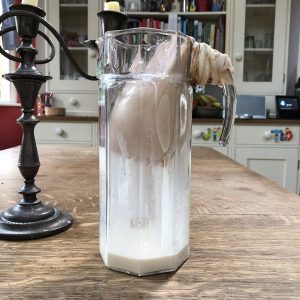
Make sure the bag isn’t sitting in the liquid as it drips through… I tie mine to the handle and leave gravity to pull it through for half an hour or so.
Gently squeeze bag to ensure all the liquid is out.
Sometimes – if I’m feeling impatient – I sit the straining bag between two small metal strainers and compress… though squeezing out the liquid by hand is more satisfying if you have time.
Allow the mylk to drop through into the jug, leaving the pulp in the straining bag
When you are done you will have about a cup of pulverized nuts left in the straining bag. Don’t throw it away!!! – follow my recipe to make super-easy gluten free wholemeal flour here. But before you do that…
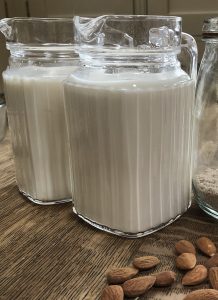
Pour the strained mylk into your glass storage jug(s). There will be less than a litre as you haven’t finished adding all the water yet.
Taste your mylk – it should be quite thick and creamy.
Top up your jug(s) with approx 2 cups of filtered water to make 1 litre of delicious MYLK. You can add less or more water to suit your taste, but as a rough guide, I suggest a cup of nuts makes a litre of good “milky” mylk.
Store your mylk in the fridge. It will separate when stored, just stir lightly with a spoon before using. Mylk can be used in hot and cold drinks, on cereal or anywhere you would normally use milk or store bought mylk. Best used within 48 hours.
Ta dah! A litre of wonderful tasting and nutritious Vegan mylk… store in the fridge and use within 48 hours!
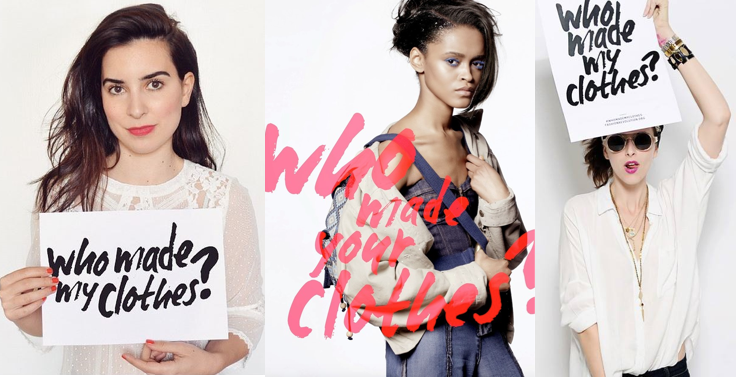
So who did make your clothes? You might not like the answer… photo courtesy of ShiftLondon.com
The reason people don’t buy ethical fashion is usually for one of two reasons;
They think it’s too expensive
or
They don’t know what to buy
So many of us aspire to be conscious consumers and value both the products we buy and, in principle at least, the people who make them. Fashion should be fun and creative, a source of pleasure as well as practicality, shouldn’t it?
At some point you’ve decided you would like to use your consumer power to encourage fashion retailers to provide safe working conditions and pay a living wage all along the supply chain…
Great! Here’s how:
DON’T CHUCK OUT all your fast fashion. It will just go to landfill, and if you care enough to boycott sweatshops, you probably care about the environment too.
DO FILTER through what you have in your wardrobe already. Bundle up anything that doesn’t fit, anything you haven’t worn for a year or anything you know deep down you just aren’t going to wear, and take it to your local charity shop or clothing recycler.
CONSIDER A PROFESSIONAL STYLIST in to help you assess your wardrobe for colours and styles that particularly suit you and make recommendations about what to buy in future. You might be surprised how affordable stylists can be… Besides, from now on your wardrobe is a collection you invest in, so buying great pieces and making minimal style mistakes is a good thing. Gotta say, I know a local (to me) Kent stylist (check out Elisa Traynor’s website here) who does colour analysis, wardrobe styling and – if you want to push the boat out – personal shopping too. She’s totally realistic about budget and all about wellbeing and body positivity. I have found her colour advice particularly useful when buying new pieces as well working out how to wear existing garments even if they’re the “wrong” colour.
PHONE A FRIEND. If you think hiring a stylist is a rubbish idea, but you have a friend who’s style you admire, maybe ask them to help. Notice for yourself what colours and styles you wear when you get a compliment, and which ones tend to get your friends asking if you’re ok, or make you feel like you need to hit the gym or pile on another layer of makeup.
BE SURE ABOUT WHAT YOU WANT TO BUY. You are no longer shopping on a whim, or buying something just because it’s reduced, or buying garments for a single wear. Be fussy. Only buy clothing you know will suit you and that you will wear for years to come. Invest in classic, beautifully made pieces. I can honestly say that the quality of every single ethically produced garment I have bought has been impressive. From super-soft kids’ t-shirts and jeans, to bamboo socks, linen shirts, gymgear, jackets, sunglasses… everything! Ethical manufacturers want your repeat business and they make products to last. (They also tend to have great customer service, so if you do have a problem, get in touch!)
RETURN ALL THE CATALOGUES you get through the letterbox and unsubscribe to all the fashion marketing emails. Even the ethical fashion ones!! They will only encourage you to impulse buy. When you need something new you will know. That’s the time to look.
LOOK AT THE LABELS! When you know what you have and what you want to buy, start doing some research into your favourite brands. The sad truth is that unless a brand markets themselves as ethical and has certified labelling to prove it, it’s highly unlikely that they are. If a company is going to go to all the trouble and extra expense of meeting ethical standards, they are going to display evidence loudly and proudly that they are doing so. Check out Ethical Consumer website for the labels to look for.
NO JOY WITH THE LABEL? Consider where your garment was made – clothing manufacturers are required by law to include a “Made in…” label in every garment.
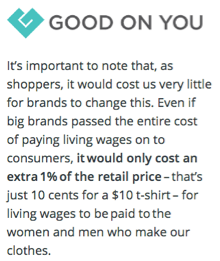
From the website “Good on You” click to see full article.
Personally, I don’t want clothing brands to take their manufacturing away from China or the many third world countries that rely on our trade. I would just like those companies to pay their workers a living wage. Bear in mind that a living wage in Bangladesh is not the same as a living wage in the UK, so this wouldn’t necessarily hike up the prices of mass produced clothing in a dramatic way… what it would mean is that the largely female workforce could afford to eat, have somewhere safe to live, provide adequate childcare or education for their children (so they don’t become the next generation of slaves) and have a small amount of disposable income. However, in terms of avoiding sweatshops, some ethical shoppers choose to buy garments which are made in Europe, USA, Australia or any other country where workers’ rights are protected. Don’t kid yourself that these countries don’t have sweatshops too though! If the garment you’re buying is super cheap, it was probably made in a sweatshop. Use social media to ask the question, “Who made my clothes”. If you get a quick, clear answer, great! Kerching! If you get a lengthy ethical policy full of good intentions but no actual commitment to a living wage and safe working environment… it’s buyer beware. Most likely you will hear nothing. Come to your own conclusion.
GO THROUGH THE 5 STAGES OF LOSS AND GRIEF. It’s tough. But you can do it.
SEARCH FOR NEW BRANDS TO LOVE. There is an absolute plethora of exciting brands which go about setting up or using worker’s cooperatives, Fairtrade factories and the like. They empower employees, providing them with fair pay, healthcare, childcare and a chance to escape poverty and abuse. That’s something you want to be a part of! Some brands are listed in the Love this! section of this very website and over time I will try to list many more. But for now, be an eo-warrior and search on Ecosia (find out about Ecosia here) for ethical fashion, ethical clothing… something like that.
SHOP THE SALES. Some ethical brands are more expensive to buy than high street brands. It’s true. (But they last longer and mean you aren’t contributing to human trafficking, slavery etc, so it’s worth a bit more, right?) Try new brands when they come on sale. I am always surprised how early in the season this happens. My children and I are usually still wearing woollies when Summer clothing goes on sale, so wait till you actually want to wear new season’s clothing before you shop.
TAKE ADVANTAGE OF FREE DELIVERY AND RETURNS. Not shopping on the high street (with very few exceptions) usually means you can’t try clothing on before you buy. Once you get to know a brand, you will know how it fits. In the early days, buy two sizes and return one, or just be prepared to send something back if it arrives and you don’t love it. Easy.
SPREAD THE WORD. Over a relatively short period of time you will develop a list of go-to brands. I make a point of giving these brands as gifts and telling anyone who compliments me where an item is from. Don’t forget to tag brands if you post images on social media too!
I always love to hear from readers about their ethical fashion journey… what brands do you love? How did you manage the change from fast fashion to slow fashion? What made you make your own pledge to shop sweatshop free? Let me know… Email: kate@strippedbarefashion.com Twitter: @manytimesmummy Insta: @stripped.bare.fashion
Featured image credits: “Who made my/your clothes?” dazedimg.dazedgroup.netdna-cdn.com, makeandbelievemagazine.com, ravishly.com
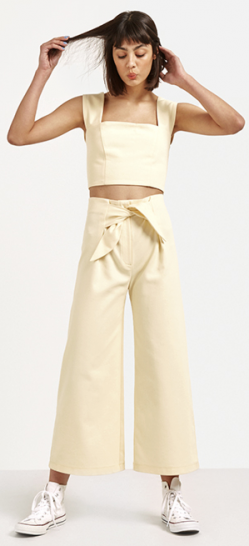
Ooooh… lemon yellow tie front wide leg culotte from Nobody’s Child
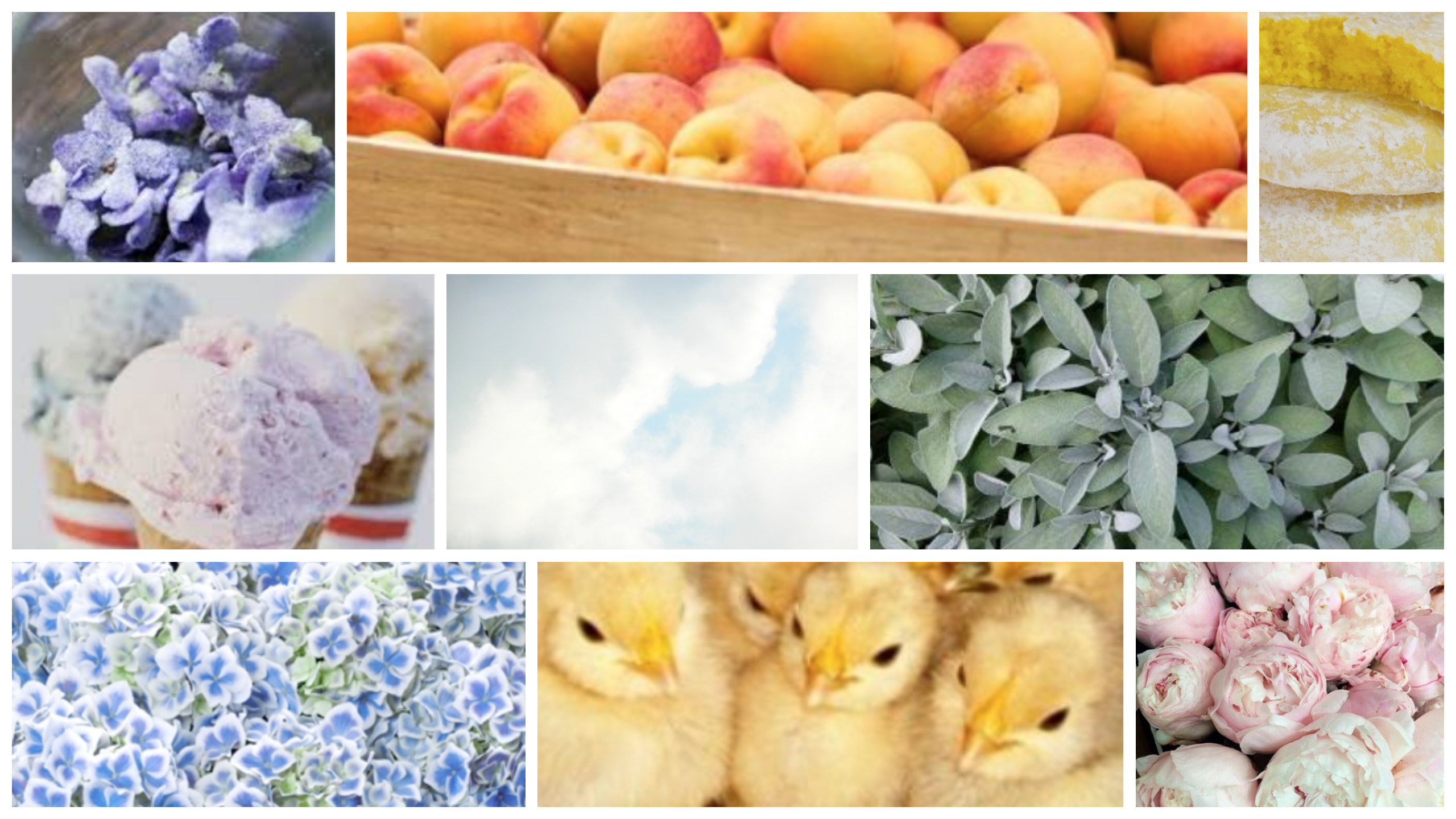
For Spring/ Summer 2018, the fashion world is offering up all manner of pretty pieces in the softest, most flattering gelato inspired colours.
But if you’re committed to buying ethical fashion the thought of shopping cheap, throwaway trends is counter-intuitive. If you’re wanting to add some on-trend colour, you don’t have to go head-to-toe pastels! Mint, fuzzy peach, dusty pink and baby blue all look great with your existing black, white or tan basics.
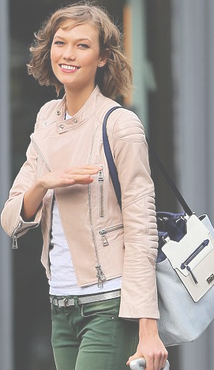
Steal her style! – Karlie Kloss showing how to pair pastels with olive green and keeping the accessories light.
To add a touch of pastel, pair a top in your favourite faded shade with a pair of white linen trousers or skirt. Olive green and navy work well too as a good base for adding pastels.
Keep the look fresh and light with delicate styles – such as strappy sandals and a small clutch or shoulder bag – if you want to wear dark or bright accessories from your existing wardrobe. Personally, I love the contrast of white or tan with pastels and would steer clear of beiges, greys and more earthy shades.
A combination of different pastel shades works too. Layer up a shabby chic rainbow by pulling together all your old and new pastel items. Don’t forget faded blue denim jeans and jackets which look brilliant contrasted with yellows and pinks and finished with your shiniest white eco-trainers.
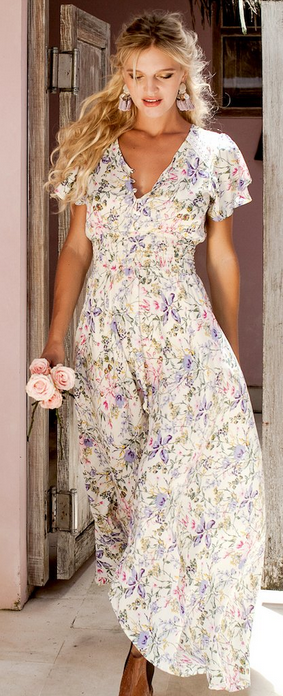
Floaty fabrics create a feminine look: beautiful maxi dress from BaliElf
Luxe fabrics work brilliantly to emphasize delicate colours. Consider sueded silks for their muted, peach-skin softness; chiffon for the addition of translucent colour (think a draped scarf or floaty overskirt): or crushed, coloured linen. Embroidery is still strong as a trend and can add some depth and texture.
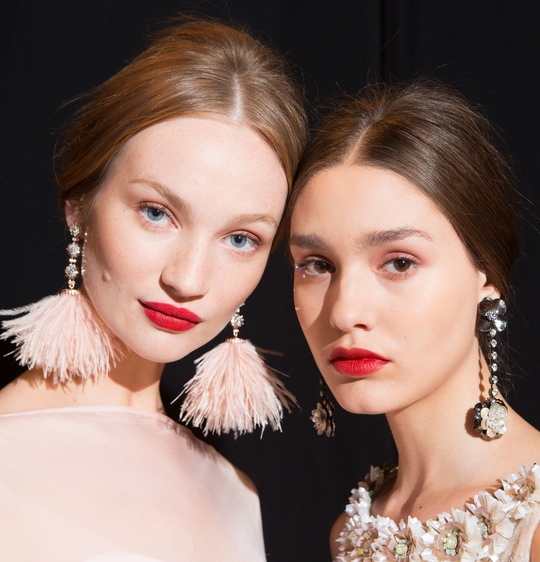
From Badgley Mischka’s fashion week offerings… barely there makeup and bright red lips work so well with pale and pretty clothing
Colour advisers suggest you choose shades which contrast with your natural skin tone to compliment your complexion: Try blushed pink or apricot near the face if you have olive skin, yellows and melon for pale, cooler tones, and icy blues or soft sage for those with a rosier complexion.
Before you dash out the door, give your makeup a moment’s thought. Pearlescent glosses or dewy matt lips in cashmere colours can accentuate the prettiness of pastels. But alternatively, don’t hesitate to go bold with your lipstick. Bright red lips create impact against an otherwise understated palette and look to be a top SS18 makeup trend when worn with otherwise minimal makeup.
Last but not least, if you want to avoid sweatshop fashion:
Buy quality, not quantity – spending more money on a garment that is thoughtfully made will improve it’s longevity and reduce your contribution to clothing landfill
Look for brands that promote their business ethics – credentials such as Fairtrade and certified organic are found on labels, or you can easily research ethical policies online
Ask online or instore #whomademyclothes
Join the ethical fashion conversation by sharing your favourite finds on social media with #fashionrevolution, or tag @kate.adores in your image
Follow the links from the images to shop the clothing shown in this article
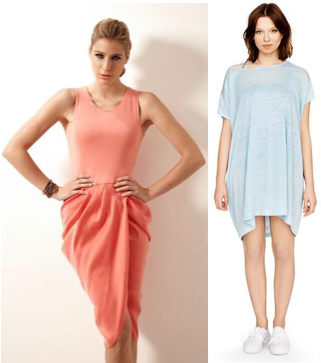
Dresses in sorbet-soft colours from Outsider fashion: blue lightweight linen tunic and peach bamboo and silk draped dress
My go-to brand for coats has to be Seasalt. Whether you’re looking for light weight or heavy duty, long or short, brightly coloured or understated, Seasalt is the place to start.
When I moved to the UK from Australia I had no idea of the need for such a
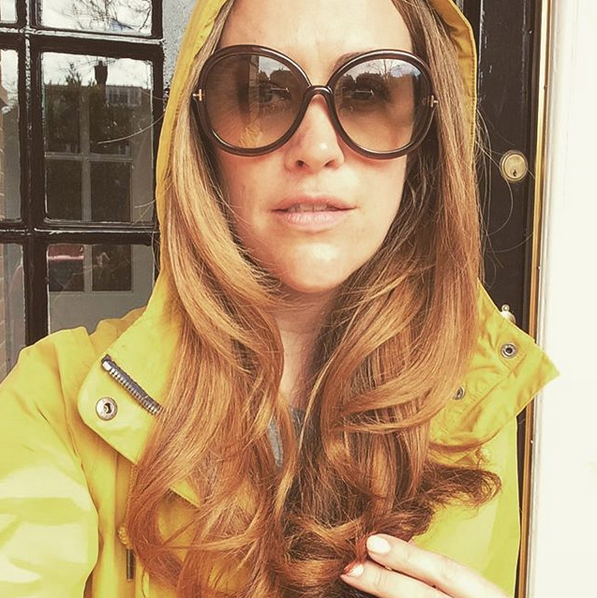
From kate.adores: Not hot, not cold… Maybe rain… The best ethically-made lightweight coats are by #seasalt… So many different shapes lengths and colours… #feelgoodfashion #ethicalfashion #transseasonalfashion #yellow #madeinuk #rainproof #spring
variety of outerwear – one leather jacket, one denim jacket and an umbrella pretty much gets an Aussie through the cold weather! So after shivering through my first Winter a helpful friend told introduced me to the notion that there is no such thing as bad weather, only unsuitable clothing.
Hello options such as waterproof, windproof, breathable, packable, rollable, reversible, belted, buttoned, zipped or toggled… coats for dog walking, beach combing, school runs, day trips, errands and standing on the sidelines at sports matches.
Seasalt follow the Ethical Trading Initiative (ETI) base code and provide information on their social and environmental policies which deserve a read. And what’s more they can be found on the high street which is very rare indeed for a truly ethical fashion label.
Now I would describe my coats as a collection, and Seasalt is very much at the practical heart of it.
I’m not a foodie of any worthy note, in fact my lifelong enjoyment of vegan, vegetarian and raw food has often convinced me that I am the opposite of a foodie! But Summer is coming and I have a recipe for a colourful and delicious salad that has only met with approval from friends and family, so here it is…
Superfood salad – makes enough for two
Prepare and layer the ingredients as follows:
A generous handful of organic spinach leaves, tightly rolled up and cut into thin spiky slices
One medium organic carrot, peeled if necessary and finely diced
One organic avocado, gently cut into small cubes
Half an organic red pepper finely sliced
Three organic spring onions finely sliced
Two small organic celery stalks finely sliced
200g smoked tofu, cut into small cubes
A dozen organic mint leaves, finely chopped
Three tablespoons of organic pomegranate seeds
Half a punnet of organic watercress sprouts, or if you grow your own, a good handful
Half a cup of raw organic almonds
One tablespoon of organic hemp seeds
Whisk the following ingredients in a small jug to make your dressing:
One tablespoon organic apple cider vinegar
Two teaspoons organic date syrup (or you could use Manuka honey if you’re not vegan)
One tsp organic Dijon mustard
Three tablespoons organic oil – I use one called Omega Cool Oil which is a mixture of flax, hemp, evening primrose and pumpkin seed, or you could use any of those oils by themselves, or avocado oil, or walnut oil or your own combination of any of the above oils!!
Pour the dressing over the salad, mix gently to coat but not pulverize the avocado and serve into two large pasta bowls.
Grind a little black pepper on top, sprinkle half a dozen whole coriander leaves on each serve (optional) and enjoy… It takes a while to eat!
Adapted from my recipe originally published on diamondsanddaisychains.com
It was a good thing that The Sun removed topless women from its page 3. Boobs aren’t news and they don’t belong in a so-called “family newspaper” for ogling purposes. The idea is as ridiculously out-of-date as pinching a good looking stranger on the bottom while winking and saying, “hey foxy lady”. No. You just don’t do it. It’s lecherous and quease-inducing and anyone who attempts to defend it will just end up embarrassing themselves. It seemed, for a happy couple of days, that David Dinsmore and Rupert Murdoch had finally pooled their social-insight to figure this out.
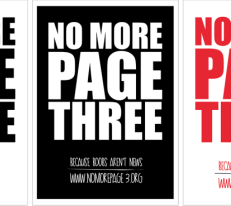
Yes, on Tuesday we had the much celebrated news that The Sun’s page 3 will now be a nipple free zone. But not actually boob free. No, those will still be there but from now on they will have a flimsy bra on to match the flimsy panties. And Page 3 Girls will still be there for no purpose other than to ogle.
I felt like someone over at The Sun had been kinda clever in that smug, self-congratulatory way that some people have to navigate situations which has them seeming to do “the right thing”. Sexy gals in bras and knickers instead of sexy gals just in knickers… a step in the right direction? Or a tactical move designed to take the wind out of the sails of the eternally positive and robust No More Page 3 (NMP3) campaigners?
Personally, I didn’t see how adding a bra to the situation had achieved what all the campaigners – myself included – were hoping for. I can’t speak for others, but I don’t think I’m alone in saying I don’t mind nipples. In fact I don’t mind nudity of any body part in principal. What I mind is the objectification of women in a way that creeps into public spaces and family environments, in a way that normalises misogyny.
Misogyny isn’t ok. We want to normalise environments in which young people aren’t inappropriately sexualised: young women should be able to sit on a train without having the bloke next to them ogling Page 3. We want to normalise the recognition and celebration of women based on their achievements, and not judge them on their tittie phwoar-factor.
Yes, easy access to pornography is likely to shape the sexual identity of the upcoming generation. That’s hard to stop. But the end of mainstream soft-porn, presented as part of the regular news, is long overdue.
Some clueless fool commented on the NMP3 Facebook page that “all (us) feminists want to get (our) boobs out to breastfeed whenever and wherever (we) want but can’t stand seeing boobs on Page 3. It pretty much summed up the whole missing-the-point that seems to go on around this issue. It’s not breasts/nipples that bother us – not at all!! – it’s being constantly sexualised, constantly evaluated and commented on for the way we look, and the way that translates into inequality in almost every environment. In a world where that didn’t happen, half naked women would not be featured in mainstream media purely for titillation (I know!) and no one would imagine a woman nursing her baby was a desperate ploy for sexual attention from a third party.
So today we hear that page 3 is back in it’s original nudie format. So what? The bra-and-pants combo was no less objectifying than the bra-off-tits-out look.
I wholeheartedly applaud everyone involved in the No More Page 3 campaign. You guys are my heroes and the heroes of countless other individuals and esteemed organisations like Girlguiding UK, Mumsnet, The British Youth Council, Unison union and Breast Cancer UK to name just a few. You are powerful, proactive people who have inspired a new generation of feminists and generated a magnificent amount of interest and energy around this important conversation.
No one is saying that about Dinsmore or Murdoch. No, they are still a pair of dinosaurs who are failing to evolve, probably imagining themselves somehow champions in some pitiful battle to prove that soft porn does indeed belong in the mainstream news. It’s simply not a battle they can win.
—
Originally published on diamondsanddaisychains.com



 Monkee Genes: everything you could ask for in an ethical denim jeans brand, and very loud and proud about promoting their values.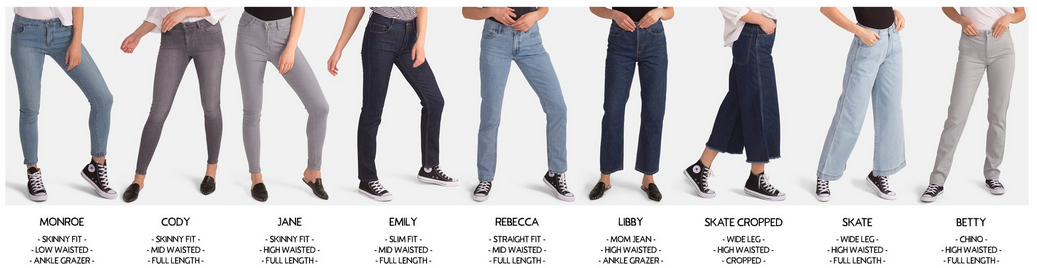

 Ingredients