Tag: fashion revolution

  • Monkee Genes

    Monkee Genes

    ethical fashion denim jeans brand Monkee GenesMonkee Genes: everything you could ask for in an ethical denim jeans brand, and very loud and proud about promoting their values.

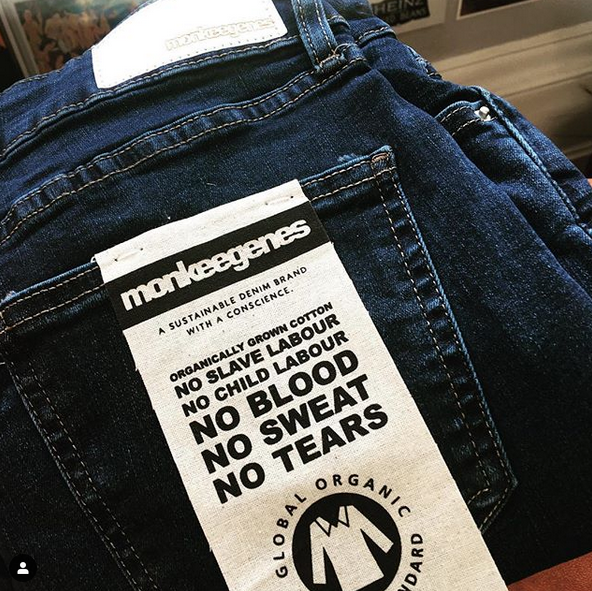
    The first thing you see when you open a parcel from Monkey Genes is one big, bold label announcing…

    ‘No slave labour, no child labour, no blood, no sweat, no tears.’

    …doesn’t that make you happy?

    Because this is a website about ethical fashion, let’s talk ethics first. Monkee Genes was founded in by Phil Wildbore who “wanted to prove that there is such a thing as looking fashionable whilst supporting sustainability”. Denim garments are notoriously difficult to produce in a social and environmentally responsible way, but by using organic cotton and sourcing GOTS Certified factories, Monkee Genes are able to reduce the negative impact of their products on everyone along the supply chain.

    From the cotton farmer who isn’t getting lungs full of chemicals and is able to fairly trade his product; the habitat and biofauna that aren’t getting doused with insecticides; the people who handle, spin and transform the cotton into denim; and those turning swathes of fabric into pairs of jeans… Monkee Genes are putting ethics at the heart of their production.

    “We work hard to protect the people who make our clothes, working closely with our factories to ensure safe working conditions and a decent living wage. Our commitment to ethics paired with a innovative fits offers a point of difference to the denim market. All organic, all ethically produced, all fairly made!” Round of applause here please.

    Now let’s talk fashion…
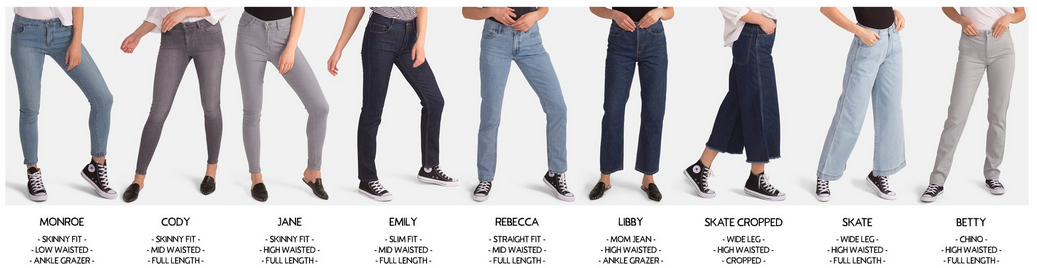
    Monkee Genes fit guide ethical fashion denim jeans brand

    Something for EVERYONE!! I’ve been buying Monkee Genes since I first became properly aware of ethical fashion, in 2010. Their range has increased and improved over that time, and their fabric and fit has remained superb. My one gripe with them was that they didn’t do a high waist… but now they do!! Hello Jane (see above!), the perfect jean in every way!

    Whatever ever your preferred fit is, choose from a variety of colours and washes, and make sure they’re perfect for you with either a regular or long cut.

    And there’s even more styles for men to choose from…
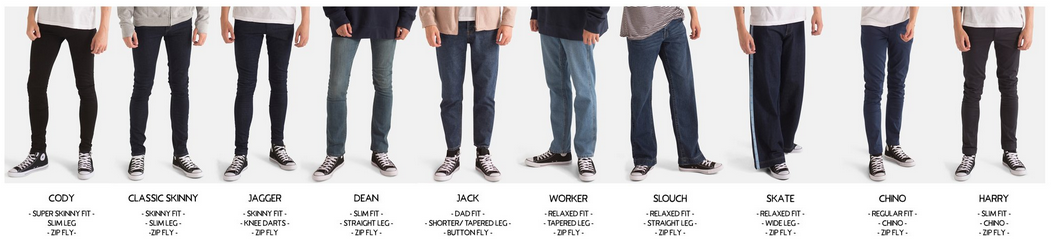
    Ethical mens denim brand jeans Monkee Genes

    Pricing is very reasonable too and might even make you question why designer jeans with unknown provenance could possibly cost so much more…
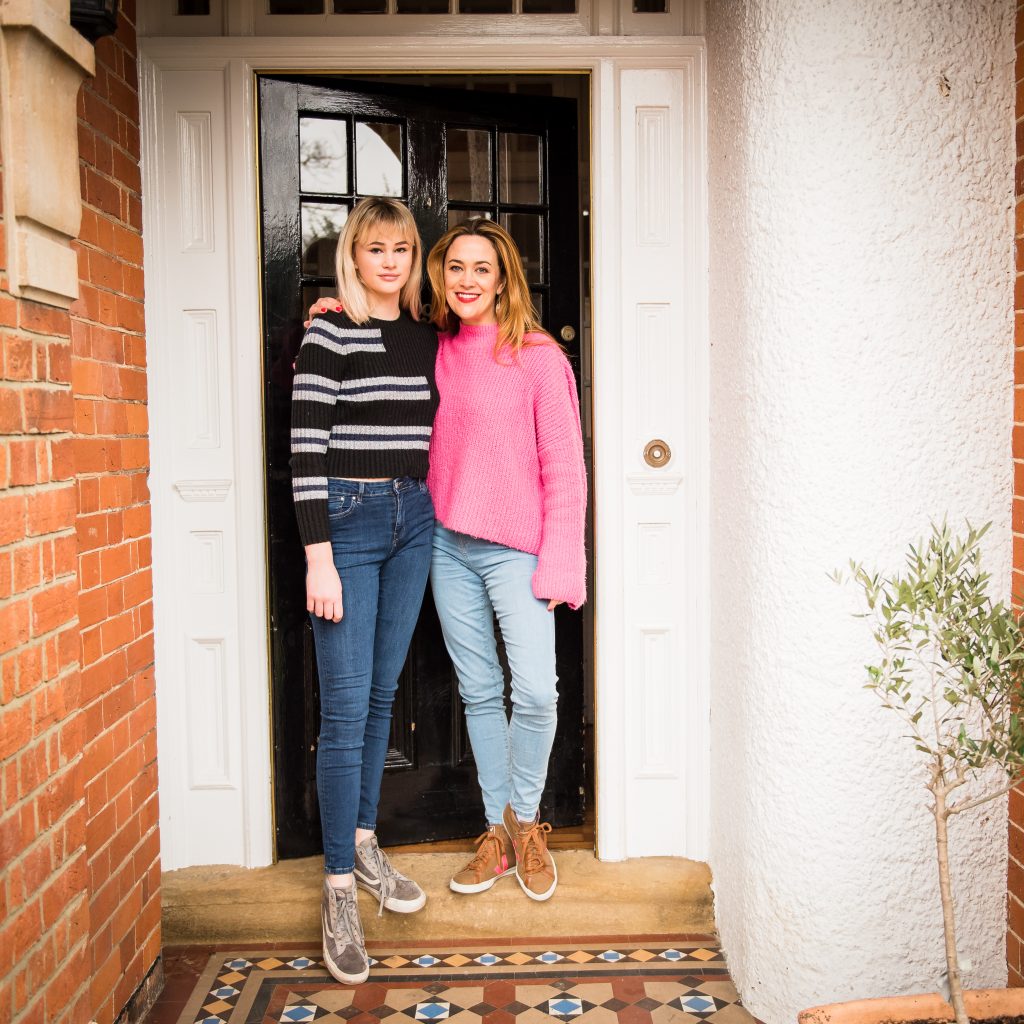
    ethical danim jeans brand Monkee Genes
    Me and my gal, Lila, in our Monkee Genes jeans


  • Acne Studios

    Acne Studios

    Suddenly, we all want Acne…

    Acne Studios is an ethical ready-to-wear fashion brand which features sublimely quirky tailoring and an eclectic mix of custom-developed fabrics. You get the feeling that every detail on every garment is unique to the brand, down to the last oversized button, asymmetrical collar or monogrammed feature-zipper. It’s a bold brand – you won’t find someone else wearing something similar from a different label – with a quintessentially Scandi feeling.

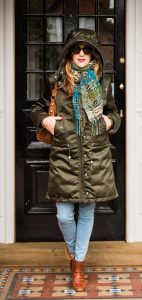
    Kate Harcourt in Acne Studios Powder Parka Ethical fashion outerwear
    Acne Studios green Powder Parka – the warmest coat for the coldest days!

    Acne Studios produce men and women’s clothing ranges, footwear and accessories, as well as sturdy and colourful children’s basics. I think of their adult clothing pieces as statements: there’s nothing shy about them! Creative Director Jonny Johansson’s captures the edginess of contemporary art and culture, but although his style is very much cutting-edge, it is well worn on younger and older people alike.

    Ethical outerwear

    My personal favourite range has to be their ethical outerwear. Invest in a super-luxe anorak or trench coat and you’ll be seeing off the cold in style for years to come. It’s not cheap, but it couldn’t possibly be! It’s too rich in every detail to come at a bargain price.

    Check their credentials…

    Acne Studios are proud members of the Fair Wear Foundation (FWF) since 2008. Have a read of their Corporate social responsibility policy and even review their Social report and FWF Brand performance check, from links on the same page.

    Spread the word!

    Let me know if you love Acne Studios… what’s in your wardrobe and what’s on your wishlist? kate@strippedbarefashion.com or @stripped.bare.fashion

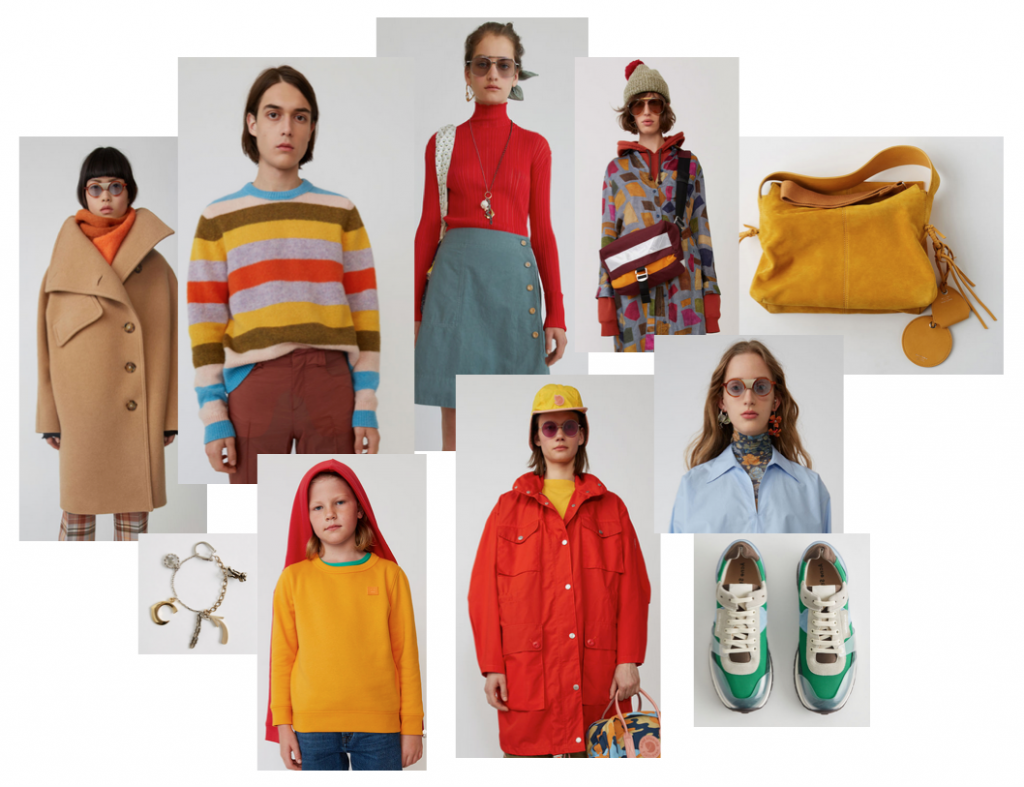
    Eclectic luxe ethical fashion from Acne Studios
    Eclectic luxe from Acne Studios – images from acnestudios.com


  • Go on! Take the ethical fashion plunge

    Go on! Take the ethical fashion plunge

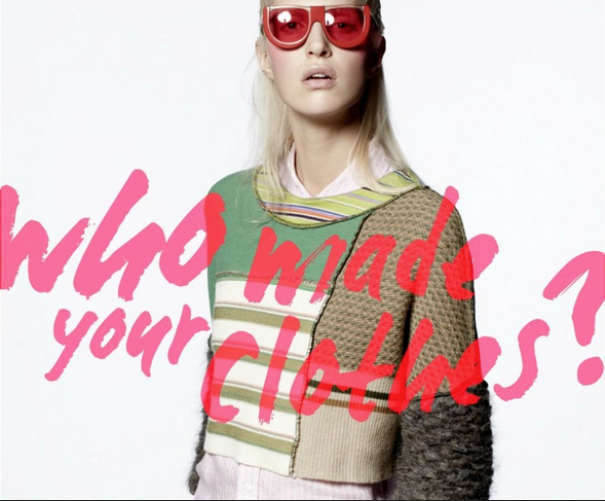
    So who did make your clothes? You might not like the answer… photo courtesy of ShiftLondon.com

    The reason people don’t buy ethical fashion is usually for one of two reasons;

    They think it’s too expensive

    or

    They don’t know what to buy

    So many of us aspire to be conscious consumers and value both the products we buy and, in principle at least, the people who make them. Fashion should be fun and creative, a source of pleasure as well as practicality, shouldn’t it?

    At some point you’ve decided you would like to use your consumer power to encourage fashion retailers to provide safe working conditions and pay a living wage all along the supply chain…

    Great! Here’s how:

    1. DON’T CHUCK OUT all your fast fashion. It will just go to landfill, and if you care enough to boycott sweatshops, you probably care about the environment too.
    2. DO FILTER through what you have in your wardrobe already. Bundle up anything that doesn’t fit, anything you haven’t worn for a year or anything you know deep down you just aren’t going to wear, and take it to your local charity shop or clothing recycler.
    3. CONSIDER A PROFESSIONAL STYLIST in to help you assess your wardrobe for colours and styles that particularly suit you and make recommendations about what to buy in future. You might be surprised how affordable stylists can be… Besides, from now on your wardrobe is a collection you invest in, so buying great pieces and making minimal style mistakes is a good thing. Gotta say, I know a local (to me) Kent stylist (check out Elisa Traynor’s website here) who does colour analysis, wardrobe styling and – if you want to push the boat out – personal shopping too. She’s totally realistic about budget and all about wellbeing and body positivity. I have found her colour advice particularly useful when buying new pieces as well working out how to wear existing garments even if they’re the “wrong” colour.
    4. PHONE A FRIEND. If you think hiring a stylist is a rubbish idea, but you have a friend who’s style you admire, maybe ask them to help. Notice for yourself what colours and styles you wear when you get a compliment, and which ones tend to get your friends asking if you’re ok, or make you feel like you need to hit the gym or pile on another layer of makeup.
    5. BE SURE ABOUT WHAT YOU WANT TO BUY. You are no longer shopping on a whim, or buying something just because it’s reduced, or buying garments for a single wear. Be fussy. Only buy clothing you know will suit you and that you will wear for years to come. Invest in classic, beautifully made pieces. I can honestly say that the quality of every single ethically produced garment I have bought has been impressive. From super-soft kids’ t-shirts and jeans, to bamboo socks, linen shirts, gymgear, jackets, sunglasses… everything! Ethical manufacturers want your repeat business and they make products to last. (They also tend to have great customer service, so if you do have a problem, get in touch!)
    6. RETURN ALL THE CATALOGUES you get through the letterbox and unsubscribe to all the fashion marketing emails. Even the ethical fashion ones!! They will only encourage you to impulse buy. When you need something new you will know. That’s the time to look.
    7. LOOK AT THE LABELS! When you know what you have and what you want to buy, start doing some research into your favourite brands. The sad truth is that unless a brand markets themselves as ethical and has certified labelling to prove it, it’s highly unlikely that they are. If a company is going to go to all the trouble and extra expense of meeting ethical standards, they are going to display evidence loudly and proudly that they are doing so. Check out Ethical Consumer website for the labels to look for.
    8. NO JOY WITH THE LABEL? Consider where your garment was made – clothing manufacturers are required by law to include a “Made in…” label in every garment.
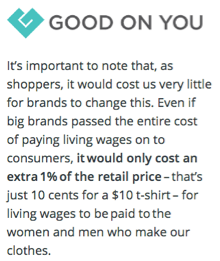
      From the website “Good on You” click to see full article.

      Personally, I don’t want clothing brands to take their manufacturing away from China or the many third world countries that rely on our trade. I would just like those companies to pay their workers a living wage. Bear in mind that a living wage in Bangladesh is not the same as a living wage in the UK, so this wouldn’t necessarily hike up the prices of mass produced clothing in a dramatic way… what it would mean is that the largely female workforce could afford to eat, have somewhere safe to live, provide adequate childcare or education for their children (so they don’t become the next generation of slaves) and have a small amount of disposable income. However, in terms of avoiding sweatshops, some ethical shoppers choose to buy garments which are made in Europe, USA, Australia or any other country where workers’ rights are protected. Don’t kid yourself that these countries don’t have sweatshops too though! If the garment you’re buying is super cheap, it was probably made in a sweatshop. Use social media to ask the question, “Who made my clothes”. If you get a quick, clear answer, great! Kerching! If you get a lengthy ethical policy full of good intentions but no actual commitment to a living wage and safe working environment… it’s buyer beware. Most likely you will hear nothing. Come to your own conclusion.

    9. GO THROUGH THE 5 STAGES OF LOSS AND GRIEF. It’s tough. But you can do it.
    10. SEARCH FOR NEW BRANDS TO LOVE. There is an absolute plethora of exciting brands which go about setting up or using worker’s cooperatives, Fairtrade factories and the like. They empower employees, providing them with fair pay, healthcare, childcare and a chance to escape poverty and abuse. That’s something you want to be a part of! Some brands are listed in the Love this! section of this very website and over time I will try to list many more. But for now, be an eo-warrior and search on Ecosia (find out about Ecosia here) for ethical fashion, ethical clothing… something like that.
    11. SHOP THE SALES. Some ethical brands are more expensive to buy than high street brands. It’s true. (But they last longer and mean you aren’t contributing to human trafficking, slavery etc, so it’s worth a bit more, right?)  Try new brands when they come on sale. I am always surprised how early in the season this happens. My children and I are usually still wearing woollies when Summer clothing goes on sale, so wait till you actually want to wear new season’s clothing before you shop.
    12. TAKE ADVANTAGE OF FREE DELIVERY AND RETURNS. Not shopping on the high street (with very few exceptions) usually means you can’t try clothing on before you buy. Once you get to know a brand, you will know how it fits. In the early days, buy two sizes and return one, or just be prepared to send something back if it arrives and you don’t love it. Easy.
    13. SPREAD THE WORD. Over a relatively short period of time you will develop a list of go-to brands. I make a point of giving these brands as gifts and telling anyone who compliments me where an item is from. Don’t forget to tag brands if you post images on social media too!

    I always love to hear from readers about their ethical fashion journey… what brands do you love? How did you manage the change from fast fashion to slow fashion? What made you make your own pledge to shop sweatshop free? Let me know… Email: kate@strippedbarefashion.com Twitter: @manytimesmummy Insta: @stripped.bare.fashion

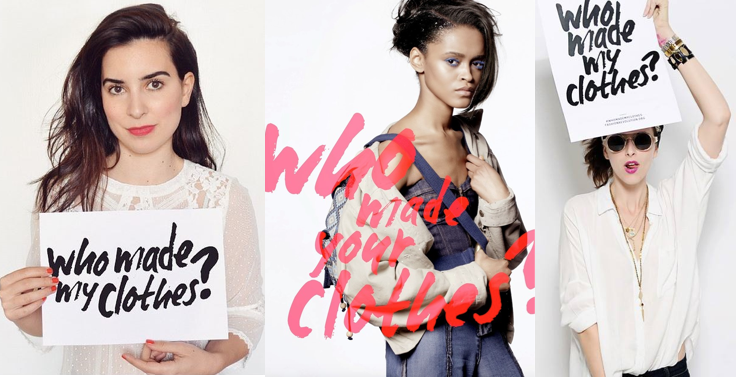
    Featured image credits: “Who made my/your clothes?” dazedimg.dazedgroup.netdna-cdn.com, makeandbelievemagazine.com, ravishly.com

  • Arguing with M&S: Fashion Revolution Day 2014

    Arguing with M&S: Fashion Revolution Day 2014

    This is exactly why we need to have labels on our clothing which tell us whether the people who made each garment worked in a safe environment and were paid a living wage:


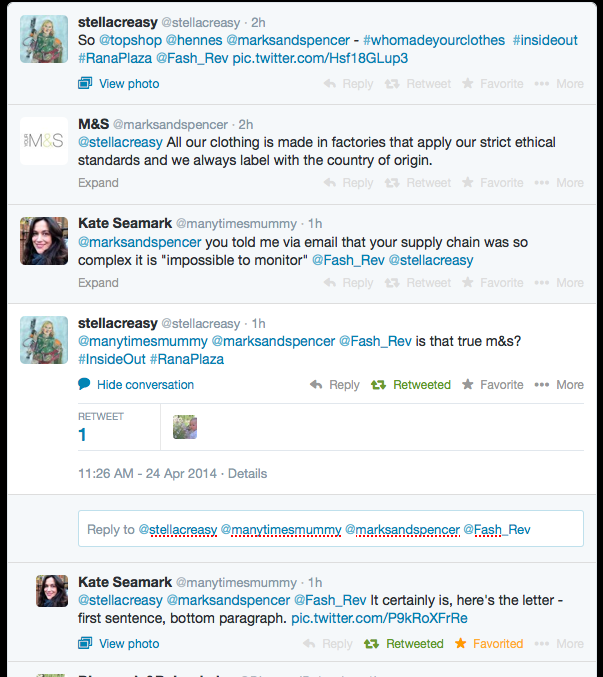
    On Fashion Revolution Day, the anniversary of the deaths of 1133 people in the now-notorious sweatshop, Rana Plaza, Labour MP Stella Creasy asked H&M, Topshop and M&S who made your clothes? H&M and Topshop chose to stay schtum. (If you can’t say something nice, don’t say anything at all, right guys??)

    M&S took the other classic High Street fashion retailer approach and tried to get warm and fuzzy: All our clothing is made in factories that apply our strict ethical standards and we always label with the country of origin. Not just any old ethical standards, strict ones, no less! The only problem is that a few months ago, I also asked them about their ethical standards and spent quite some time reading through the documents they sent me in response. And although they were/ are quick to reassure consumers that they are fashion good guys, they don’t pay living wages or ensure safe working conditions. They told me so back in January. Amongst other things they said:

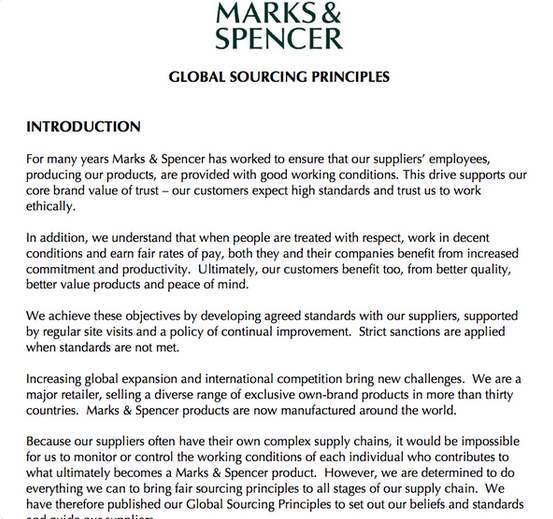
    “Because our suppliers often have their own complex supply chains, it would be impossible for us to monitor or control the working conditions of each individual who contributes to what ultimately becomes a Marks & Spencer product.”

    But getting back to the Twitter conversation on Fashion Revolution Day… there I am sitting at my computer seeing M&S crowing about their “strict ethical standards”, and remembering that they told me their supply chain is impossible to monitor… so, I piped up with my two bob’s worth: you told me via email that your supply chain was so complex it is “impossible to monitor”

    At that point M&S chose to follow H&M and Topshop’s strategy. They went silent.

    Stella Creasy asked: is that true m&s? Their answer? Yep, more silence.

    Now, in 2019, it’s taken me ages to trawl through my documents and find that letter… my Tweet doesn’t seem to be there any more, the original article on Diamonds and Daisychains is long gone and the email I received from which I quote M&S as saying their supply chain is “impossible to monitor” has a broken link to the letter. BUT… I found an old screenshot, took a new screenshot, and here it is (bottom paragraph, first two lines):

    And that, my friends is why we need clothing labels which clearly indicate whether workers all along the fashion supply chain are paid living wages and work in safe conditions: If fashion retailers were required to label their clothing in this way they couldn’t just go silent and not tell us how they make our clothes.

    • Consumers deserve the right to tell quickly and easily, at the point of sale, if clothes were made in sweatshops.
    • At present, fashion retailers are under no obligation to tell us how our clothes are made.
    • We know from incidents like Tazreen and Rana Plaza that severe human rights abuses occur in our name when fashion retailers don’t have to be transparent about their supply chain.

    We know more about the chickens that lay our eggs than the people who sew our clothes.

    That’s not ok.


    Originally published on diamondsanddaisychains.com