Tag: homemade

  • Vegan lentil pies

    Vegan lentil pies

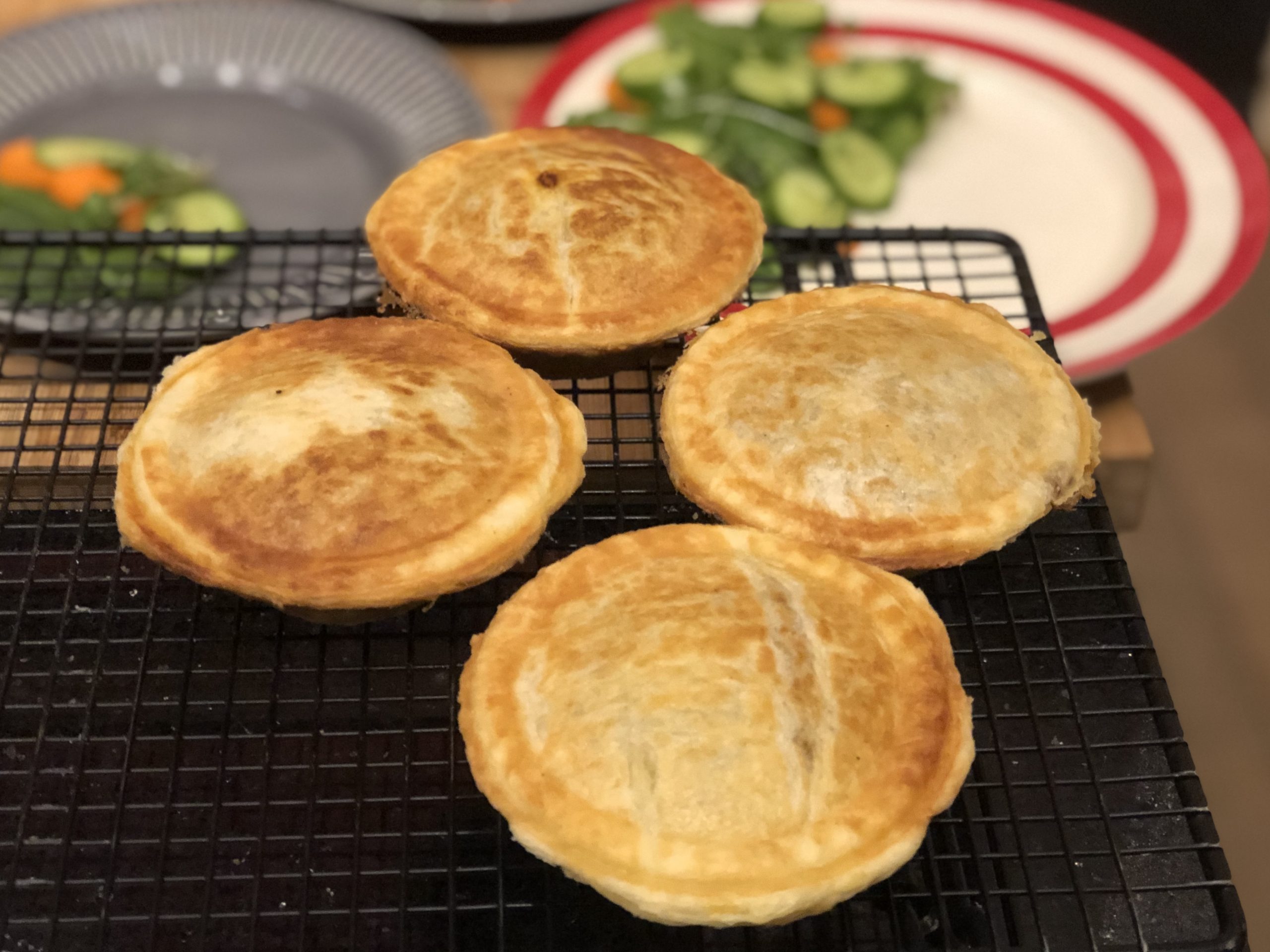
    Makes 4 x 12cm pies, or six x 10cm pies… or one big one if you prefer!

    A few friends have asked me recently for recipe ideas… this is a very unusual occurrence, and obviously based on being vegan/ vegetarian more than my famous culinary skills!
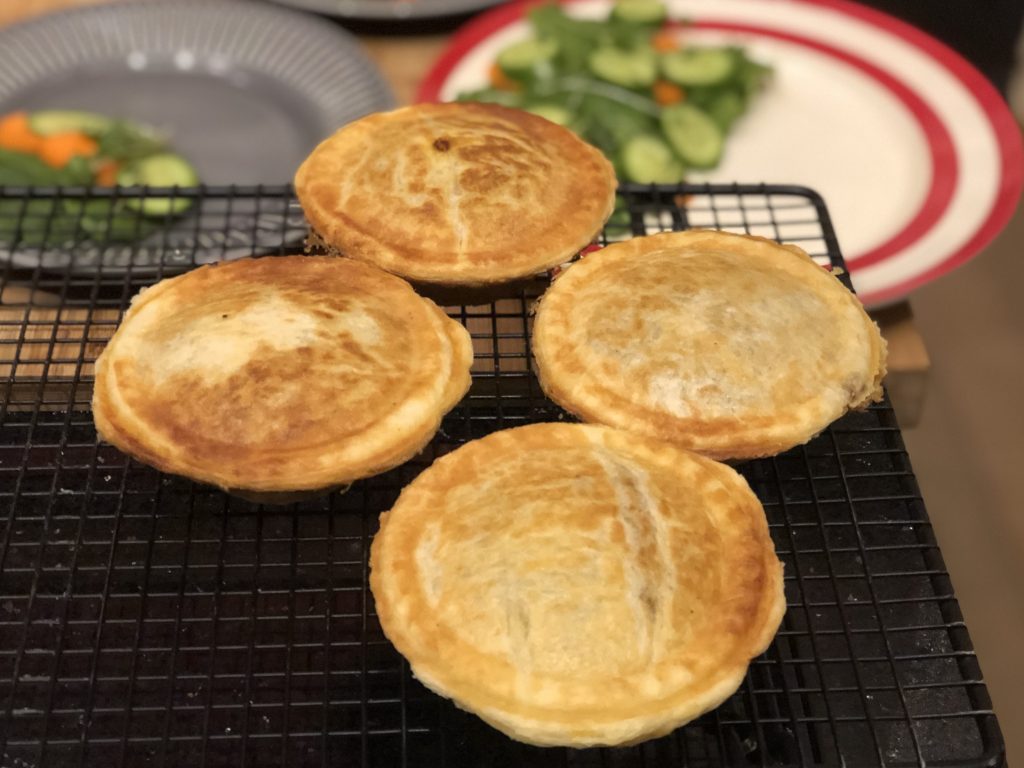
    So this is an absolute basic… In my book, lentil pies are a stand alone dish, but the filling is what I use for vegan mince if I don’t want to use a ready-made product (such as Quorn) and can be varied to make bolognese, cottage pie etc

    Ingredients

    1 tbl coconut oil

    2 shallots peeled and finely chopped

    1 garlic cloves peeled and finely chopped

    A sprig of rosemary

    A couple of sprigs of thyme

    125g dried puy lentils, rinsed thoroughly

    125ml passata

    2tbl tomato paste

    400ml stock (Marigold Vegan is good)

    1 tsp liquid smoke or 1 tbl smoked paprika

    1 sheet puff pasty

    1 tbl egg replacer (you can use nut milk if you prefer but I find the egg replacer gives the crust a more golden colour!)

    Method

    Warm the oil and add the shallots and garlic

    Soften on a low heat for 8-10 minutes until lightly golden

    Add the rinsed lentils to the pan and stir though onions and garlic

    Stir in passata, tomato paste and stock

    Add rosemary and thyme and liquid smoke or smoked paprika

    Leave simmering on a low heat, checking and stirring from time to time

    If the mixture gets too think or dry, add a little extra water

    When finished you want it to be moist without being runny and firm but not dry

    The cooking instructions on my puy lentils always seem to underestimate cooking time… I would leave the pan simmering for a good 45 minutes, but I do prefer the lentils to be very soft (and I get complaints about them having “bones” if they’re crunchy…)

    While the lentils are simmering, cut the top and bottom pastry rounds and fit the base into an oiled pie tin

    When the lentils have cooked, spoon them into the prepared pie tin… don’t underfill or you’ll have stingy pies and the top will sag. The mixture won’t expland during cooking except for heat, so fill close to the top

    Brush the edges with egg replacer and fit the lids on top, carefully pressing down to ensure the edges seal

    Brush the top of each pie with more egg replacer

    Bake in a 180°C for 20 minutes – slightly less for smaller pies, and up to 40 minutes for one large pie
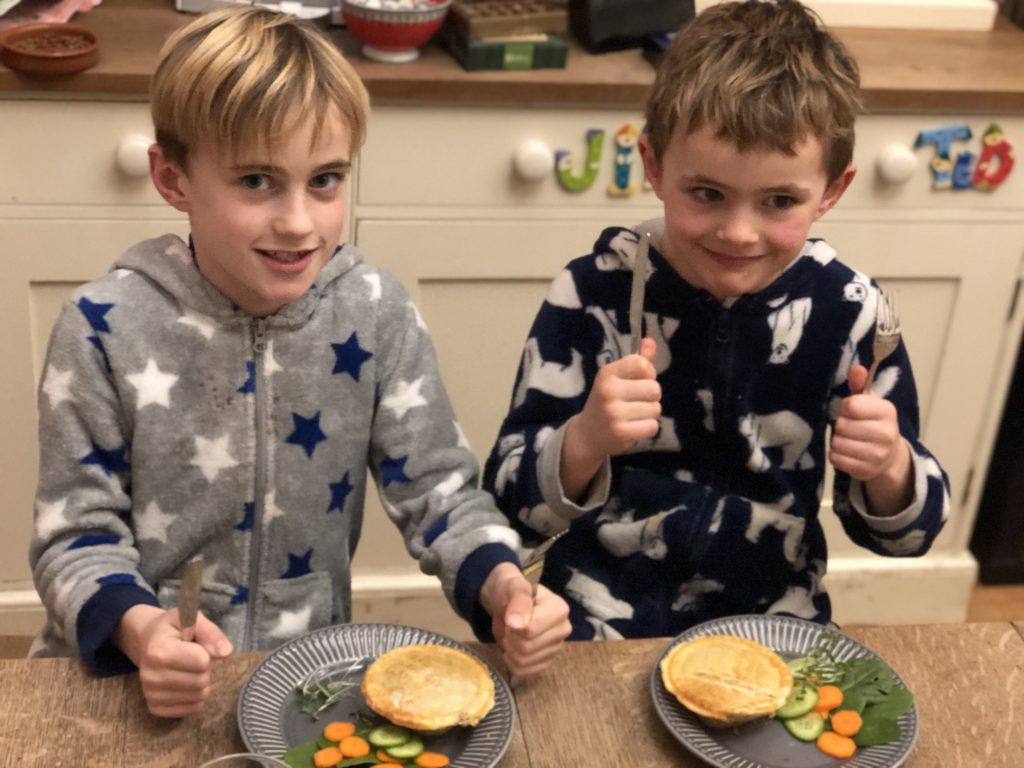

    One more idea: If I’m making these pies I usually make double quantity of the lentils, use half for little pies and put the other half in a ceramic baking dish that can go in the freezer…. a week or so later, I whip out the frozen lentils and top with mashed potato for super quick cottage pie.
  • Simple bread using a bread machine

    Simple bread using a bread machine

    Kate Harcourt's fail-safe bread recipeFail-safe bread recipe

    This is an absolute fail-safe bread recipe. It’s so easy and so satisfying. It’s an adaptation of a recipe given to me by my niece, Anna.

    So long as you use strong bread flour, you can use any combination of grain you fancy: kamut (also known as khorasan), rye and spelt are all great, high-protein alternatives to wheat flour. I regularly use 100% kamut, 100 %rye or 100% wholemeal wheat… and I also regularly upend the remainder of multiple packets of different flour to make up the necessary quantity.

    For a lighter loaf try half strong white with half kamut, rye or spelt. To be honest, when it’s homemade and you know exactly what’s in the mix, I don’t even bat an eyelid at making 100% white for the children.

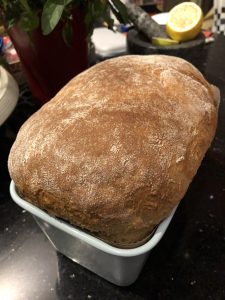
    I use a bread machine to mix and prove the dough, then I like to give it a bit of a knead by hand and second prove in a loaf tin, before baking in the oven.

    For an even simpler recipe, you can do it all in the bread machine. (I just don’t like the tall thin loaf shape I get from my bread machine by doing it that way.) Details of both methods follow…

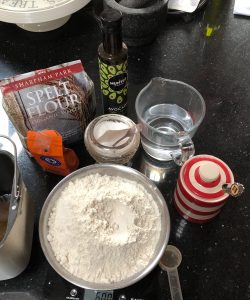
    Ingredients for Kate Harcourt's fail-safe bread recipeIngredients

    • 310ml luke-warm filtered water
    • 1 heaped tsp sea salt
    • 2 tblsp brown sugar
    • 2 tblsp oil (I use avocado, but rice bran or good old olive are fine too)
    • 1 medium organic egg
    • 600g strong bread flour – a good starting mix is 300g organic kamut (I use Dove’s Farm Khorasan), 300g organic white spelt (I use Sharpham Park)
    • 2 tsp quick yeast (I use Dove’s Farm)

    Equipment

    • Measuring spoons
    • Measuring jug
    • Scales
    • Bread machine with dough setting
    • 2 lb loaf tin
    • Loaf tin liner (I use a Bake-O-Glide loaf tin liner which I have cut slightly to perfectly fit my tin)

    Method – to make dough in machine and bake in oven

    • Preheat oven to 160°C – If using an AGA, as I do, you’re going to use the baking oven, and there’s no need to preheat.
    • Place all ingredients unceremoniously into the bread making dish in order: water, salt, sugar, oil, egg, then tip in the flour and sprinkle the yeast on top.
    • Switch bread maker to dough setting. This will mean your machine mixes and kneads, then warms the dough to prove, or rise. Mine takes just over an hour to get to the point of readiness. Don’t leave it longer or it gets dry on top.
    • When the dough has risen take it from the machine and place it on a very lightly floured surface.
    • Knead the dough by pressing and stretching it, folding it over and over onto itself. Here’s a simple “how-to” video if you’re not sure how to knead… have a watch, give it a whirl, it’s not that tricky! Modern yeast is so stable and effective that a few minutes of first-time kneading will be fine to do the job.
    • Shape your dough to fit the bread tin: roll it onto a smooth sausage shape and pat the ends so it’s about the same size as the loaf tin.
    • Kate Harcourt fail-safe bread recipe
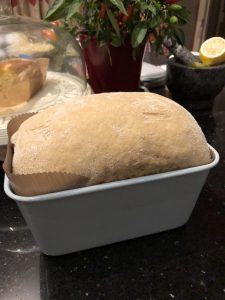
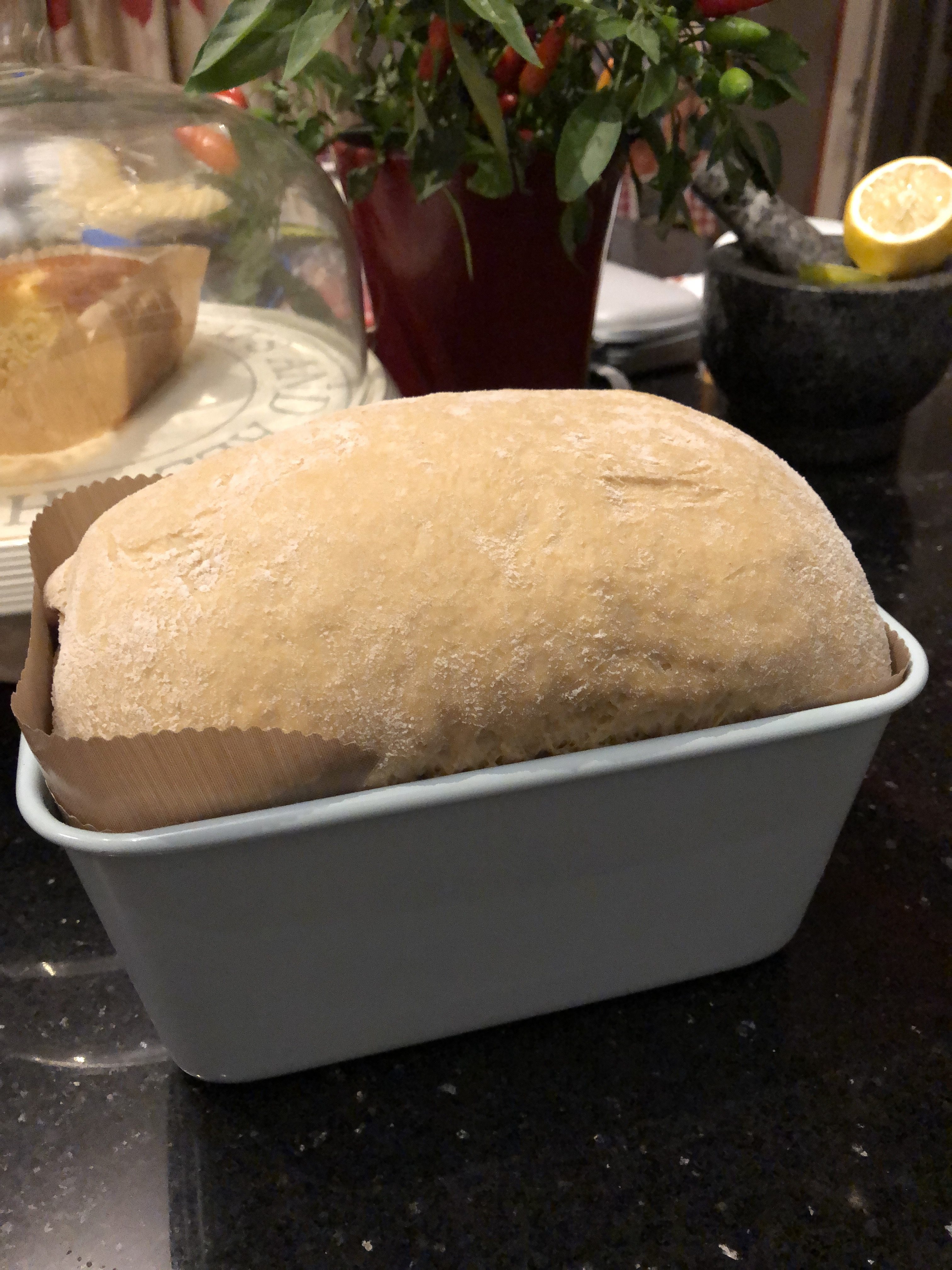
      After the second prove… risen again beautifully in the tin, ready to bake…

      Fit the loaf tin liner into the tin.

    • Slip the dough into the liner, in the tin.
    • Cover the dough with a clean, damp tea-towel and leave in a warm place to rise again.
    • After 30 minutes, it should be well risen and ready to bake.
    • Gently cover the loaf tin and dough with foil, being careful not to squash or knock the air out of the dough.
    • Place in oven and set timer for 30 minutes
    • Check bread after 30 minutes by removing the foil and tapping lightly on the top of the bread. It should be firm to touch and make a hollow sound.
    • Put bread back in over for 5-10 minutes to develop the crust.
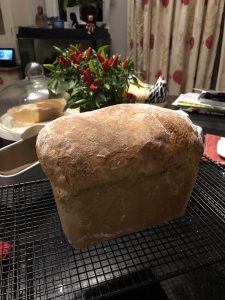
    • Remove from oven and allow to cool fully on a wire cooling rack.
    • Slice and store somewhere cool and dry, or freeze for toasting.
    Stripped bare loaf of bread! Ready to slice and eat…

    Method – to make bread in bread machine

    • Place all ingredients unceremoniously into the bread making dish in order: water, salt, sugar, oil, egg, then tip in the flour and sprinkle the yeast on top.
    • Refer to the instructions for your individual machine for preparation and baking. Most have options such as loaf size (small or large), flour options (white or wholemeal), crust colour (dark or light) and then other options such as quick loaves, delayed cooking etc. For this recipe, use the large loaf and wholemeal flour settings, unless you have used anything other than 100% white flour.
    • Shut the lid and leave the magic to happen.

    Let me know how your loaf goes – do you like kamut? Rye? Stoneground wholemeal?  Which mix works best for you and your family? I’d love to see photo’s if you fancy sharing. Tag @stripped.bare.fashion on instagram or email me at kate@strippedbarefashion.com and I’ll add you to my story x

  • Vegan mylk

    Vegan mylk

    Making your own organic vegan mylk is so easy and so delicious! Whats more you know there’s nothing but the wholesome ingredients you put in, and no heat treatments (like used for supermarket varieties) which might reduce the goodness of your raw ingredients. Making your own mylk also provides you with a nutritious, gluten free by-product – Wholemeal Flour! – which you can then use in baking…

    Here’s how you do it:

    1 litre Organic Vegan Mylk

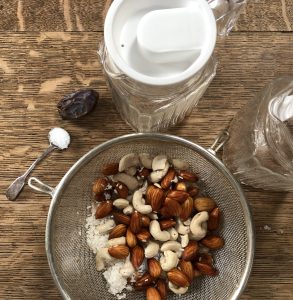
    Ready to blitz vegan nutmylk ingredientsIngredients

    1 cup raw, organic nuts (see Method for recommendations)

    1 organic date

    1 tsp salt flakes

    Approx 4 cups filtered water

    Equipment

    Measuring cup and teaspoon

    Jug blender able to finely blend nuts without blowing up

    1 litre glass storage jug, or two 500ml jugs

    1 large glass jug for straining into (a wide-ish mouth makes it easier to pour and strain into)

    Nut mylk straining bag – Buy an organic cotton bag from A Fine Choice, or try Rawsome Creations’ “more than a Nut Milk Bag”

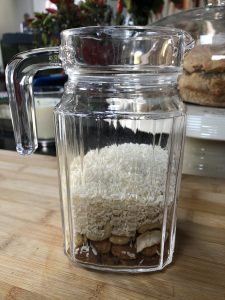
    Vegan nut mylk dry ingredients
    Dry ingredients for Vegan mylk ready to be soaked overnight in the fridge

    Method

    1. Measure 1 cup of raw nuts or a combination of several kinds of nuts, seeds, grains and/or a sprinkling of desiccated coconut. Purists can go for a cup of almonds, a cup of cashews or a cup of Brazil nuts, or mix up your recipe by combining with chia, oats, rice, hemp seeds… or any combination. Just pack a cup! My personal favourite is 1/3 cup almonds, 1/3 cup cashews and 1/3 cup desiccated coconut.It’s nutty but without an overpowering almond taste and smell, creamy because of the richness of the cashews and a hint of coconut makes it a little sweet…
    2. Soak those nuts overnight. Put them in a glass container, cover with approx 1 cup of filtered water and leave them in the fridge. This activates, softens and plumps them up.
    3. In the morning, drain off the water and discard.
    4. Put the nuts into a blender with approx 1 cup of filtered water.
    5. Add the date for sweetness and the salt for balance. (You don’t have to if you don’t want to, but I think it makes a sublime taste difference…)
    6. Straining nut mylk pulp
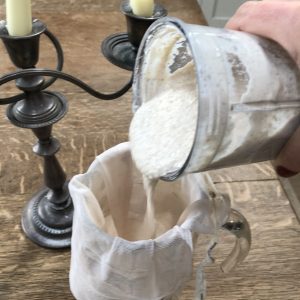
      Pour the blended ingredients into a wide mouthed jug lined with a nut mylk strainer

      Blend until very smooth. Give it a full 30 seconds and then pause for the bits to settle, then another 30 seconds.

    7. Place nut mylk straining bag in glass jug for straining, and open it out securely over the rim.
    8. Pour blended nut mixture into bag in jug
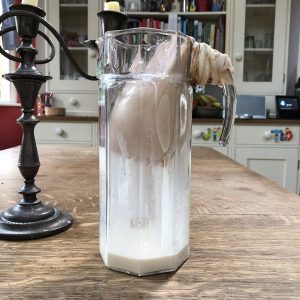
    9. Make sure the bag isn’t sitting in the liquid as it drips through… I tie mine to the handle and leave gravity to pull it through for half an hour or so.
    10. Gently squeeze bag to ensure all the liquid is out.
    11. Sometimes – if I’m feeling impatient – I sit the straining bag between two small metal strainers and compress… though squeezing out the liquid by hand is more satisfying if you have time.
    12. Straining nut mylk into glass jar
      Allow the mylk to drop through into the jug, leaving the pulp in the straining bag

      When you are done you will have about a cup of pulverized nuts left in the straining bag. Don’t throw it away!!! – follow my recipe to make super-easy gluten free wholemeal flour here. But before you do that…

    13. Pour the strained mylk into your glass storage jug(s). There will be less than a litre as you haven’t finished adding all the water yet.
    14. Taste your mylk – it should be quite thick and creamy.
    15. Top up your jug(s) with approx 2 cups of filtered water to make 1 litre of delicious MYLK. You can add less or more water to suit your taste, but as a rough guide, I suggest a cup of nuts makes a litre of good “milky” mylk.
    16. Store your mylk in the fridge. It will separate when stored, just stir lightly with a spoon before using. Mylk can be used in hot and cold drinks, on cereal or anywhere you would normally use milk or store bought mylk. Best used within 48 hours.
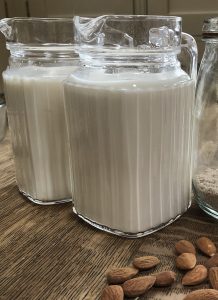
    Ta dah! A litre of wonderful tasting and nutritious Vegan mylk… store in the fridge and use within 48 hours!