Tag: high street fashion

  • Go on! Take the ethical fashion plunge

    Go on! Take the ethical fashion plunge

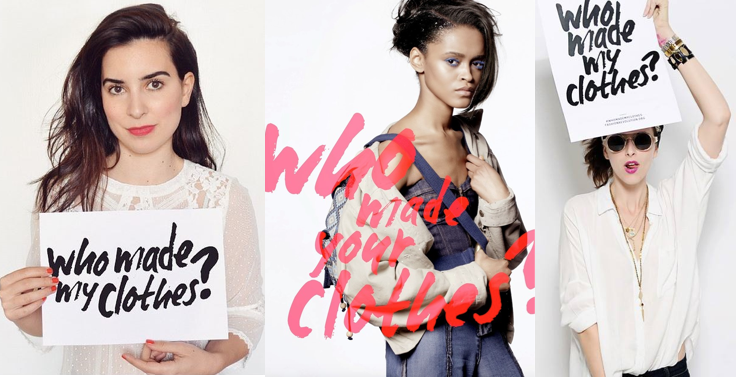
    So who did make your clothes? You might not like the answer… photo courtesy of ShiftLondon.com

    The reason people don’t buy ethical fashion is usually for one of two reasons;

    They think it’s too expensive

    or

    They don’t know what to buy

    So many of us aspire to be conscious consumers and value both the products we buy and, in principle at least, the people who make them. Fashion should be fun and creative, a source of pleasure as well as practicality, shouldn’t it?

    At some point you’ve decided you would like to use your consumer power to encourage fashion retailers to provide safe working conditions and pay a living wage all along the supply chain…

    Great! Here’s how:

    1. DON’T CHUCK OUT all your fast fashion. It will just go to landfill, and if you care enough to boycott sweatshops, you probably care about the environment too.
    2. DO FILTER through what you have in your wardrobe already. Bundle up anything that doesn’t fit, anything you haven’t worn for a year or anything you know deep down you just aren’t going to wear, and take it to your local charity shop or clothing recycler.
    3. CONSIDER A PROFESSIONAL STYLIST in to help you assess your wardrobe for colours and styles that particularly suit you and make recommendations about what to buy in future. You might be surprised how affordable stylists can be… Besides, from now on your wardrobe is a collection you invest in, so buying great pieces and making minimal style mistakes is a good thing. Gotta say, I know a local (to me) Kent stylist (check out Elisa Traynor’s website here) who does colour analysis, wardrobe styling and – if you want to push the boat out – personal shopping too. She’s totally realistic about budget and all about wellbeing and body positivity. I have found her colour advice particularly useful when buying new pieces as well working out how to wear existing garments even if they’re the “wrong” colour.
    4. PHONE A FRIEND. If you think hiring a stylist is a rubbish idea, but you have a friend who’s style you admire, maybe ask them to help. Notice for yourself what colours and styles you wear when you get a compliment, and which ones tend to get your friends asking if you’re ok, or make you feel like you need to hit the gym or pile on another layer of makeup.
    5. BE SURE ABOUT WHAT YOU WANT TO BUY. You are no longer shopping on a whim, or buying something just because it’s reduced, or buying garments for a single wear. Be fussy. Only buy clothing you know will suit you and that you will wear for years to come. Invest in classic, beautifully made pieces. I can honestly say that the quality of every single ethically produced garment I have bought has been impressive. From super-soft kids’ t-shirts and jeans, to bamboo socks, linen shirts, gymgear, jackets, sunglasses… everything! Ethical manufacturers want your repeat business and they make products to last. (They also tend to have great customer service, so if you do have a problem, get in touch!)
    6. RETURN ALL THE CATALOGUES you get through the letterbox and unsubscribe to all the fashion marketing emails. Even the ethical fashion ones!! They will only encourage you to impulse buy. When you need something new you will know. That’s the time to look.
    7. LOOK AT THE LABELS! When you know what you have and what you want to buy, start doing some research into your favourite brands. The sad truth is that unless a brand markets themselves as ethical and has certified labelling to prove it, it’s highly unlikely that they are. If a company is going to go to all the trouble and extra expense of meeting ethical standards, they are going to display evidence loudly and proudly that they are doing so. Check out Ethical Consumer website for the labels to look for.
    8. NO JOY WITH THE LABEL? Consider where your garment was made – clothing manufacturers are required by law to include a “Made in…” label in every garment.
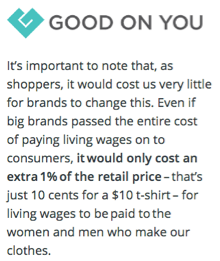
      From the website “Good on You” click to see full article.

      Personally, I don’t want clothing brands to take their manufacturing away from China or the many third world countries that rely on our trade. I would just like those companies to pay their workers a living wage. Bear in mind that a living wage in Bangladesh is not the same as a living wage in the UK, so this wouldn’t necessarily hike up the prices of mass produced clothing in a dramatic way… what it would mean is that the largely female workforce could afford to eat, have somewhere safe to live, provide adequate childcare or education for their children (so they don’t become the next generation of slaves) and have a small amount of disposable income. However, in terms of avoiding sweatshops, some ethical shoppers choose to buy garments which are made in Europe, USA, Australia or any other country where workers’ rights are protected. Don’t kid yourself that these countries don’t have sweatshops too though! If the garment you’re buying is super cheap, it was probably made in a sweatshop. Use social media to ask the question, “Who made my clothes”. If you get a quick, clear answer, great! Kerching! If you get a lengthy ethical policy full of good intentions but no actual commitment to a living wage and safe working environment… it’s buyer beware. Most likely you will hear nothing. Come to your own conclusion.

    9. GO THROUGH THE 5 STAGES OF LOSS AND GRIEF. It’s tough. But you can do it.
    10. SEARCH FOR NEW BRANDS TO LOVE. There is an absolute plethora of exciting brands which go about setting up or using worker’s cooperatives, Fairtrade factories and the like. They empower employees, providing them with fair pay, healthcare, childcare and a chance to escape poverty and abuse. That’s something you want to be a part of! Some brands are listed in the Love this! section of this very website and over time I will try to list many more. But for now, be an eo-warrior and search on Ecosia (find out about Ecosia here) for ethical fashion, ethical clothing… something like that.
    11. SHOP THE SALES. Some ethical brands are more expensive to buy than high street brands. It’s true. (But they last longer and mean you aren’t contributing to human trafficking, slavery etc, so it’s worth a bit more, right?)  Try new brands when they come on sale. I am always surprised how early in the season this happens. My children and I are usually still wearing woollies when Summer clothing goes on sale, so wait till you actually want to wear new season’s clothing before you shop.
    12. TAKE ADVANTAGE OF FREE DELIVERY AND RETURNS. Not shopping on the high street (with very few exceptions) usually means you can’t try clothing on before you buy. Once you get to know a brand, you will know how it fits. In the early days, buy two sizes and return one, or just be prepared to send something back if it arrives and you don’t love it. Easy.
    13. SPREAD THE WORD. Over a relatively short period of time you will develop a list of go-to brands. I make a point of giving these brands as gifts and telling anyone who compliments me where an item is from. Don’t forget to tag brands if you post images on social media too!

    I always love to hear from readers about their ethical fashion journey… what brands do you love? How did you manage the change from fast fashion to slow fashion? What made you make your own pledge to shop sweatshop free? Let me know… Email: kate@strippedbarefashion.com Twitter: @manytimesmummy Insta: @stripped.bare.fashion

    Featured image credits: “Who made my/your clothes?” dazedimg.dazedgroup.netdna-cdn.com, makeandbelievemagazine.com, ravishly.com
  • Answers to “Just a simple yes or no, please?”

    Answers to “Just a simple yes or no, please?”

    Do you ensure that all workers along your supply chain are paid fairly and have decent working conditions?

    My post,  Just a simple Yes or No, please? was published online and emailed or sent via each company’s website to the following companies:

    Anthropologie, Baukjen, Cox & Cox, H&M, JoJo Maman Bebe, Joules, La Redoute, Me+Em, Pure Collection, Radley, Sweaty Betty, The White Company, White Stuff, Wrap London

    These are their responses in alphabetical order:

    Anthropologie

    As of September 24th, 2013, no response has been received.


    Baukjen

    We can proudly say yes for our manufacturing bases. Baukjen and Isabella Oliver are two brands which are owned and managed by a husband and wife team who believe strongly in family values. This belief extends not only to the way we treat our teams in our Head Office and the Warehouse/Distribution Centre in the UK, but to the skilled workers at the factories that we choose to produce our product in.

    Our in house design and production team controls 100% of our own brand product which we produce directly with our portfolio of factories. Over 80% of our product is made in independent and family run factories in Portugal, the remainder are produced in independent factories in Turkey and China.  We have worked hard to build solid and trustworthy working relationships with all our factories, some of which we have used since Isabella Oliver began ten years ago.  Our production team regularly visit factories and work closely with them to ensure that we have great product, at a competitive price.

    All of our factories comply with our internal Corporate and Social Responsibility guidelines which are based on global Ethical Trading Initiatives; they are also externally audited by independent companies who are specialists in the field who ensure that the factories comply with international and local laws.

    Our production team do try to visit our raw materials suppliers where possible for fabrics and trims, however due to the complex and exhaustive nature of these it is impossible for such a small and dedicated team to ensure that they also comply with our stringent policies and views without passing these extra costs onto our customers.

    We aim to ensure by our visits and external audits of our manufacturing sites that health and safety requirements are met, working conditions are fair and ensure that no child labour is used and that factories do not employ excessive and forced over time; that the factories comply with fair pay which is equal or greater than the local government minimum standards.  We also audit factory living conditions where applicable for our Far East factories, and also try to ensure that the factories do not discriminate on race, caste, national origin, religion, age, disability, gender, marital status, sexual orientation, union membership or political affiliation. We do not allow any harsh or inhumane treatment of any worker.

    We also run a scheme to reduce our carbon footprint so our samples and unwanted garments do not go to landfill, but instead are recycled to raise funds for Cancer Research.

    We hope that this answers your question fully, if you require any further information please do not hesitate to contact us on TheGirls@IsabellaOliver.com


    Cox & Cox

    As of September 24th, 2013, no response has been received.


    H&M

    As of September 24th, 2013, no response has been received.


    JoJo Maman Bebe – Mel Brown, Design & Production Director

    The simple answer to your question is Yes, but there is a more complicated answer.

    We have an extensive policy on sourcing our own brand items and a comprehensive audit covering standards that must be met by our suppliers – but it is very difficult in manufacturing to be 100 percent sure that these standards are met all the time and throughout the supply chain.

    Our audits are based on the Ethical Trading Initiative which is a good internationally agreed standard to base from. This means, amongst many things, that minimum wages are met, child labour is not used, health and safety in the workplace is adequate etc.

    However we believe that not only must these factories tick all the boxes but that we must build a relationship and trust between us and that we deal with each other in an ethical manner. Moreover we try to work with suppliers that we believe are ethical and fair in their businesses as that cascades down.

    We work primarily, but not exclusively, with family run factories around the world. Many of our relationships go back 10 to 15 years and we work with factories to improve their quality and processes over time. We do not jump ship for the cheapest price but work hard to find solutions with our factories to increased pressures on costs.  We visit our factories as often as we can, but with a small team and a very wide range of products necessitating a wide variety of factories we can’t get to all of them as often as we would like. Hence it is important for us to trust the people we work with.

    What we cannot give assurances on to the same level are the components further down the supply chain – for example the factory that makes the elastic that goes into a waistband. We try to ensure that key suppliers to our suppliers are audited but we cannot reach every part of the supply chain without a massive increase in manpower and therefore cost which we don’t feel our customers can stretch too.

    We are quite unusual in that we go direct to our factories for about 90% of what we make, and always have done, which means we do have the personal relationship it takes to have trust in our suppliers.

    That is a very brief summary of where we stand.

    We don’t claim to be perfect but we work very hard to ensure we can stand behind our product proudly and feel confident in how and where it was made.


    Joules

    As of September 24th, 2013, no response has been received.


    La Redoute

    As of September 24th, 2013, no response has been received.


    Me+Em – Charlie Cornish, Customer Services Manager

    Thank you for your email.
    We really appreciate your concerns on the environmental sourcing of our products and the well being of those who manufacture our garments and fabric.
    We are currently in the process of clarifying our CSR position, as we wish to make this as accurate and transparent as possible for our customers, who expect as high a level of ethical sourcing as yourself and your readership.
    Please find attached our current corporate social policy; please do not hesitate to contact me if I can help with any further queries.

    Corporate Social Responsbility

    At ME+EM we are committed to doing our bit for the environment.

    Climate
    –  Where possible we source fabrics that wash well at 30’c.
    –  Washing at 30’c rather than 60’c means you use a third less electricity (Source Energy SavingTrust).
    Waste
    –  Whilst we do use FSC approved tissue paper with our packaging, we keep this to a minimum.
    –  All our cardboard boxes are made from recycled materials. We only print a minimum run of
    brochures and where possible use the e-mail to communicate with our customers.
    –  The polybag we use to send out orders is resealable (meaning you can use it more than once)
    and is comprised of a percentage of recycled materials.
    Fair Partner

    –  Our current range is sourced in Portugal, where we use an OEKO-TEX® certified manufacturer that is committed to providing high quality production whilst ensuring that there is a comprehensive benefit scheme in place for all its employees. We have visited the factory to see for ourselves the environment in which they work and met many of the team that work on ME+EM.
    –  All factories used in the production of our paper products (boxes, bags, and tissue paper) are ISO approved so everyone is paid fairly and over 18yrs old.
    Sourcing
    –  All the paper used in our boxes and tissue paper is sourced from sustainable forests (ie for every tree used another one is planted).
    –  We do not currently source fair trade cotton but are investigating this for our next range.
    –  We are also investigating sourcing fabric closer to the point of manufacturing and to delivery inorder to cut down on airport freight.
    Community
    –  We are committed to providing ME+EM clothes for charitable events to use as prizes.
    –  To date we have worked with the FSID – Study of Infant Deaths foundation, Macmillan CancerSupport, The Warwickshire Hospice, Treehouse, Ambitious for Autism and Starlight.
    –  We intend to find a charity we can work with on an ongoing basis, to provide both our time andclothing where appropriate.
    We will continue to build on commitments and welcome any suggestions from our customers on what more we could be doing. Please email us at enquiries@meandem.com

    Pure Collection – Rosalind Whitley

    Thank you for your email and for taking the time to write to us about your concerns regarding ethical working conditions.

    Please be assured that we take this very seriously and we will shortly be providing further information on our website about our ethics, our commitment to sustainability as well as human and animal welfare during the production processes.

    I can confirm that whilst we are not presently a member of the Fair Labour Association, we can re-assure you that that at Pure Collection we work in close partnership with our suppliers and do our utmost to ensure conditions are of an appropriate standard.

    Thank you again for providing us with your feedback, and for raising this important issue with us. We will of course ensure that your comments are passed to the management team, who I know will also find your feedback extremely valuable and useful.


    Radley – Radley Customer Care

    Many thanks for your email.

    Please be advised that many of our goods are manufactured in India and China where we maintain strict and ethical codes of conduct with our suppliers.

    We have worked with most of our suppliers for many years and have built respectful and close working relationships with them. Our British design team visit our suppliers on a regular basis to work side by side with them in the development of our products. Our key suppliers have been, and continue to be, instrumental in our development process and play an integral part in our company’s success.

    For more information on our products, company values, and code of conduct please visit our company website www.radley.co.uk

    If you need any further assistance, please don’t hesitate to get in touch with us again.


    Sweaty Betty


    The White Company – Ellie King, The White Company Customer Service Team

    Thank you for your email and I am delighted to hear your enjoyed looking through our Autumn brochure.

    In regards to your comments about the working conditions of the people we employ to produce our products I would like to direct you to the corporate social responsibility page on our website;

    http://www.thewhitecompany.com/help/ethics/

    I would like to reassure you at The White Company we are members of the Ethical Trading Initiative and are committed to protecting workers rights.

    I hope that you are able to find all the requested information from this page and if you do have any further questions please do not hesitate to contact me and I will try my hardest to source the answers for you.


    White Stuff – Julia Sugden:

    Thank you for getting in touch with us. We take all concerns about Corporate Social Responsibility very seriously, as it’s something we really care about at White Stuff. We work with one factory in Bangladesh, which has been fully audited in line with our Ethical Code of Conduct. None of our garments are produced by the factories so sadly affected by the recent disaster in the country.

    All suppliers who join the White Stuff Family must sign up to our Ethical Code of Conduct before we do business with them. Our code covers all aspects of Health and Safety and Labour and Wage which is based on eight codes:

    ·         General principle

    ·         Non Discrimination

    ·         Forced Labour

    ·         Child Labour

    ·         Wages and Hours

    ·         Working conditions

    ·         Environment

    ·         Freedom of Association

    Each of our factories must demonstrate compliance to our Code when requested through our audit programme.

    As our supplier relationships are important to us, we’ve also thought creatively about practical ways to support workers and their families. Our ‘Made for Change’ charity bags have been sold in shops and online to raise money for children’s scholarships in India. Since 2012, we’ve funded over 330 children’s scholarships, which cover school fees, uniforms, educational materials and exam fees.

    We are always looking to evolve our commitment through CSR and will continue to update our website with more details of what we’ve been up to and what we’d like to achieve in the longer term.


    Wrap London – Vicci Hallam, Wrap Customer Care:

    Thank you for contacting us and I fully understand your concerns. We source garments and accessories from a number of countries, our leather jackets are made in Italy, Sendra boots are from Spain and some of our jewellery is designed and made in the UK. The majority of garments are manufactured in Hong Kong, India, China and Portugal and our Managing Director personally visits all our main suppliers at least twice a year. We have continued to work with the suppliers who supported us at launch and in most cases the MD is a personal friend of the owners. Our partners are also small sized businesses that are often family owned. Their factories are all well run, professional organisations with good labour relations and they do not use child labour. We do not design and manufacture for the cheaper, high volume, low price end of the market, all our clothes are manufactured in well-established factories that produce beautifully made, high quality garments in limited quantities.


    Ad endum, no further responses or updates from any of the above listed companies were ever received…

    Originally published on diamondsanddaisychains.com

  • Just a simple yes or no, please?

    Just a simple yes or no, please?

    I receive clothing catalogues through my letterbox nearly every day of the year. Some I have requested. Most I have absolutely no idea where they got my name and address from. This is my AW13 response, sent to the following retailers:

    Anthropologie, Baukjen, Cox & Cox, H&M, JoJo Maman Bebe, Joules, La Redoute, Me+Em, Pure Collection, Radley, Sweaty Betty, The White Company, White Stuff, Wrap London


    Dear clothing retailer

    Thank you for sending me your latest catalogue, packed with lovely looking goodies for Autumn/ Winter 13. As well as shopping for myself, I also have a husband and six fashion conscious children to clothe, ranging in age from 19 years, to 10 months. As you can imagine, we buy a lot of clothes!!

    However, since the Rana Plaza collapse in Bangladesh, I find myself in possession of a burning social conscience. Before I spend a single penny I need to redress my clothes shopping habits.

    I simply cannot continue to be a mindless consumer, who ignores the awful lives – and sometimes awful deaths – of vulnerable, impoverished, powerless people.

    If I were in their position I would find it outrageous that others could happily exploit my powerlessness for their own sartorial self indulgence and vanity on the cheap.

    To this end I am writing to you.

    I would like to know about the provenance of your clothing.

    Personally, I will be going out of my way to support brands which are clear about their environmental credentials and promote the wellbeing and fair treatment of workers throughout their supply chain.

    As a journalist, I am also writing about my experience and sharing what I discover with the readers of online magazine Diamonds and Daisychains. A lot of our readers – mainstream, middleclass women – have shown interest in ethical clothing lately, though they have found it very hard to get clear information on whether particular labels use sweatshops or not… some brands like to make it complicated with long documents written in legal jargon which basically amount to a commitment to have good intentions so long as they’re a marketable commodity. This is not what we’re looking for!

    Other brands provide clear statements such as “All the people who work in our factories are over 19 years old, and they all receive a fair, fixed salary for their hard work and work decent hours.” We like that.

    I would really appreciate it if you would let me know about your brand and your ethics:

    Do you ensure that all workers along your supply chain are paid fairly and have decent working conditions?

    Just a simple yes or no would be brilliant, though if you want to mention additional great things your company does, we’d love to hear about them too!

    I will be publishing this letter together with the responses I receive.

    Last but not least, if you are unwilling to answer my question, please remove me from your mailing list.

    Regards

    Kate Seamark

    Editor

    Diamonds and Daisychains

    ___

    Originally published on diamondsanddaisychains.com