Tag: aga

  • Simple bread using a bread machine

    Simple bread using a bread machine

    Kate Harcourt's fail-safe bread recipeFail-safe bread recipe

    This is an absolute fail-safe bread recipe. It’s so easy and so satisfying. It’s an adaptation of a recipe given to me by my niece, Anna.

    So long as you use strong bread flour, you can use any combination of grain you fancy: kamut (also known as khorasan), rye and spelt are all great, high-protein alternatives to wheat flour. I regularly use 100% kamut, 100 %rye or 100% wholemeal wheat… and I also regularly upend the remainder of multiple packets of different flour to make up the necessary quantity.

    For a lighter loaf try half strong white with half kamut, rye or spelt. To be honest, when it’s homemade and you know exactly what’s in the mix, I don’t even bat an eyelid at making 100% white for the children.

    I use a bread machine to mix and prove the dough, then I like to give it a bit of a knead by hand and second prove in a loaf tin, before baking in the oven.

    For an even simpler recipe, you can do it all in the bread machine. (I just don’t like the tall thin loaf shape I get from my bread machine by doing it that way.) Details of both methods follow…
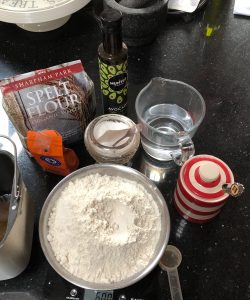
    Ingredients for Kate Harcourt's fail-safe bread recipeIngredients

    • 310ml luke-warm filtered water
    • 1 heaped tsp sea salt
    • 2 tblsp brown sugar
    • 2 tblsp oil (I use avocado, but rice bran or good old olive are fine too)
    • 1 medium organic egg
    • 600g strong bread flour – a good starting mix is 300g organic kamut (I use Dove’s Farm Khorasan), 300g organic white spelt (I use Sharpham Park)
    • 2 tsp quick yeast (I use Dove’s Farm)

    Equipment

    • Measuring spoons
    • Measuring jug
    • Scales
    • Bread machine with dough setting
    • 2 lb loaf tin
    • Loaf tin liner (I use a Bake-O-Glide loaf tin liner which I have cut slightly to perfectly fit my tin)

    Method – to make dough in machine and bake in oven

    • Preheat oven to 160°C – If using an AGA, as I do, you’re going to use the baking oven, and there’s no need to preheat.
    • Place all ingredients unceremoniously into the bread making dish in order: water, salt, sugar, oil, egg, then tip in the flour and sprinkle the yeast on top.
    • Switch bread maker to dough setting. This will mean your machine mixes and kneads, then warms the dough to prove, or rise. Mine takes just over an hour to get to the point of readiness. Don’t leave it longer or it gets dry on top.
    • When the dough has risen take it from the machine and place it on a very lightly floured surface.
    • Knead the dough by pressing and stretching it, folding it over and over onto itself. Here’s a simple “how-to” video if you’re not sure how to knead… have a watch, give it a whirl, it’s not that tricky! Modern yeast is so stable and effective that a few minutes of first-time kneading will be fine to do the job.
    • Shape your dough to fit the bread tin: roll it onto a smooth sausage shape and pat the ends so it’s about the same size as the loaf tin.
    • Kate Harcourt fail-safe bread recipe
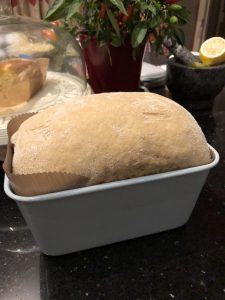
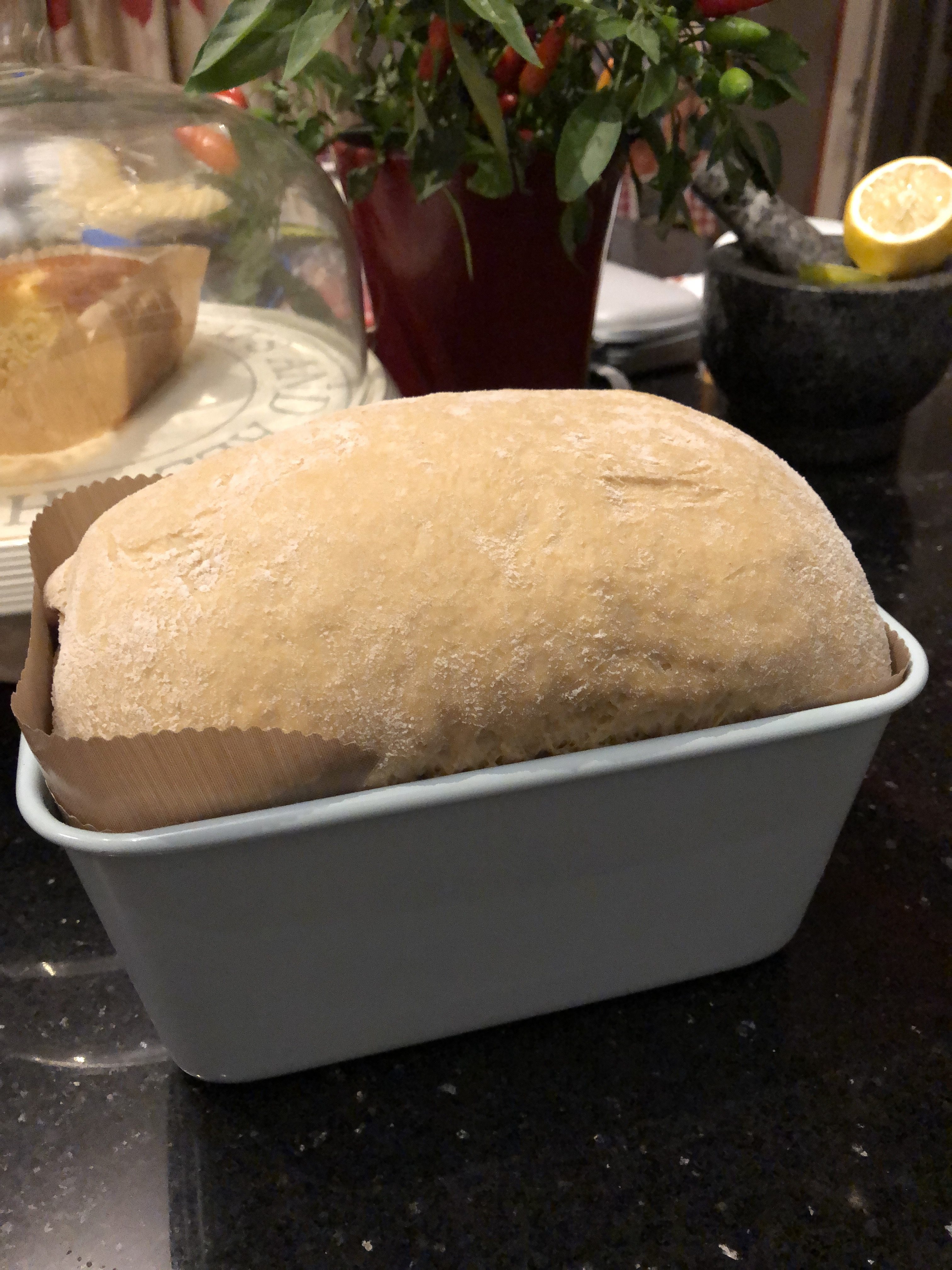
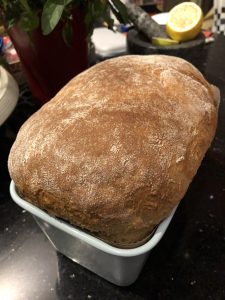
      After the second prove… risen again beautifully in the tin, ready to bake…

      Fit the loaf tin liner into the tin.

    • Slip the dough into the liner, in the tin.
    • Cover the dough with a clean, damp tea-towel and leave in a warm place to rise again.
    • After 30 minutes, it should be well risen and ready to bake.
    • Gently cover the loaf tin and dough with foil, being careful not to squash or knock the air out of the dough.
    • Place in oven and set timer for 30 minutes
    • Check bread after 30 minutes by removing the foil and tapping lightly on the top of the bread. It should be firm to touch and make a hollow sound.
    • Put bread back in over for 5-10 minutes to develop the crust.
    • Remove from oven and allow to cool fully on a wire cooling rack.
    • Slice and store somewhere cool and dry, or freeze for toasting.
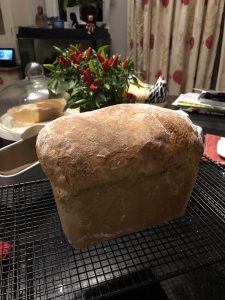
    Stripped bare loaf of bread! Ready to slice and eat…

    Method – to make bread in bread machine

    • Place all ingredients unceremoniously into the bread making dish in order: water, salt, sugar, oil, egg, then tip in the flour and sprinkle the yeast on top.
    • Refer to the instructions for your individual machine for preparation and baking. Most have options such as loaf size (small or large), flour options (white or wholemeal), crust colour (dark or light) and then other options such as quick loaves, delayed cooking etc. For this recipe, use the large loaf and wholemeal flour settings, unless you have used anything other than 100% white flour.
    • Shut the lid and leave the magic to happen.

    Let me know how your loaf goes – do you like kamut? Rye? Stoneground wholemeal?  Which mix works best for you and your family? I’d love to see photo’s if you fancy sharing. Tag @stripped.bare.fashion on instagram or email me at kate@strippedbarefashion.com and I’ll add you to my story x
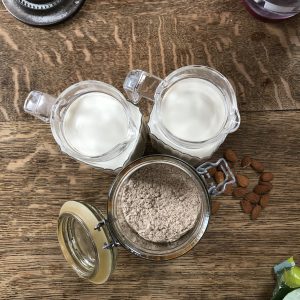
  • Gluten free wholemeal flour

    Gluten free wholemeal flour

    gluten free wholemeal
    After making Vegan mylk, dehydrate the strained-off pulp to make your own unique gluten-free wholemeal flour!

    Besides making a delicious and wholesome raw baking ingredient, this is the most useful and least wasteful way to use the nutritious by-product of homemade Vegan mylk. You’re not really going to make this by itself, you’ll start by following my mylk recipe and when you get to the part that says “…you will have about a cup of pulverized nuts left in the straining bag. Don’t throw it away!!!…” just set aside the bag of pulp, finish making the mylk and then come back to this page.

    Ok. Here we go…

    Gluten free wholemeal flour

    Ingredients

    The pulp left over in the straining bag from making Vegan mylk… possibly any combination of nuts and grains such as almond, cashew, hazelnut, chia, oats, rice, hemp… it can be pure pulp, for example, if you’ve made pure almond milk, or any mixture you have used to make your mylk. If you’ve followed my recipe religiously there will be a trace of date and salt in there too…

    That’s it.

    Equipment

    Wide, flat baking dish

    Food processor

    Method

    1. Empty out the contents of the nut mylk straining bag you have used to make mylk.
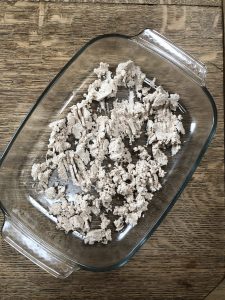
    2. Pulp from straining bag, after making Vegan mylk gluten free wholemeal
      Spread the mylk by-product, pulp, in a ceramic baking dish. It’s ready to blitz when it’s dry and crumbly…

      You should have roughly a cup and a half of pulp, the equivalent of a fist-sized ball (this is the cup of nuts and seeds used in the mylk recipe which is slightly expanded due to soaking.)

    3. Break up the pulp and spread as thinly as possible across the baking dish.
    4. I am lucky enough to have an AGA oven in my kitchen, the top of which is the perfect place to dehydrate food. If you are using an AGA, just sit the uncovered dish of pulp on top of a closed hot plate and leave it to dry out over night. **I have to say, I adore my AGA rangecooker… but my Falcon American -style fridge/freezer – which is also an AGA Rangemaster product – has been nothing short of an disappointing and expensive disaster (rusted/peeling front door, malfunctioning ice machine, 21°C in the fridge (I put things in there to warm up!), failed water filter and a “frost free” freezer like a dripping ice rink) … a disaster which despite only being 5 years old at the time of publishing, AGA Rangemaster could not care less about. I digress…
    5. If you don’t have an AGA, just preheat your oven to its minimum temperature and place the uncovered dish of pulp on the bottom of the oven for 2-3 hours.
    6. The pulp is finished dehydrating when it is hard and crunchy to touch, and crumbles between your fingers.
    7. Place the dried pulp into a food processor and blitz until a fine meal is formed. The longer you blitz, the finer the meal. I like to give it several bouts, lightly shaking in between to make sure any lumps come to the surface. When you no longer see lumps upon shaking, it’s done.
    8. Store your gluten free wholemeal flour in an airtight jug.
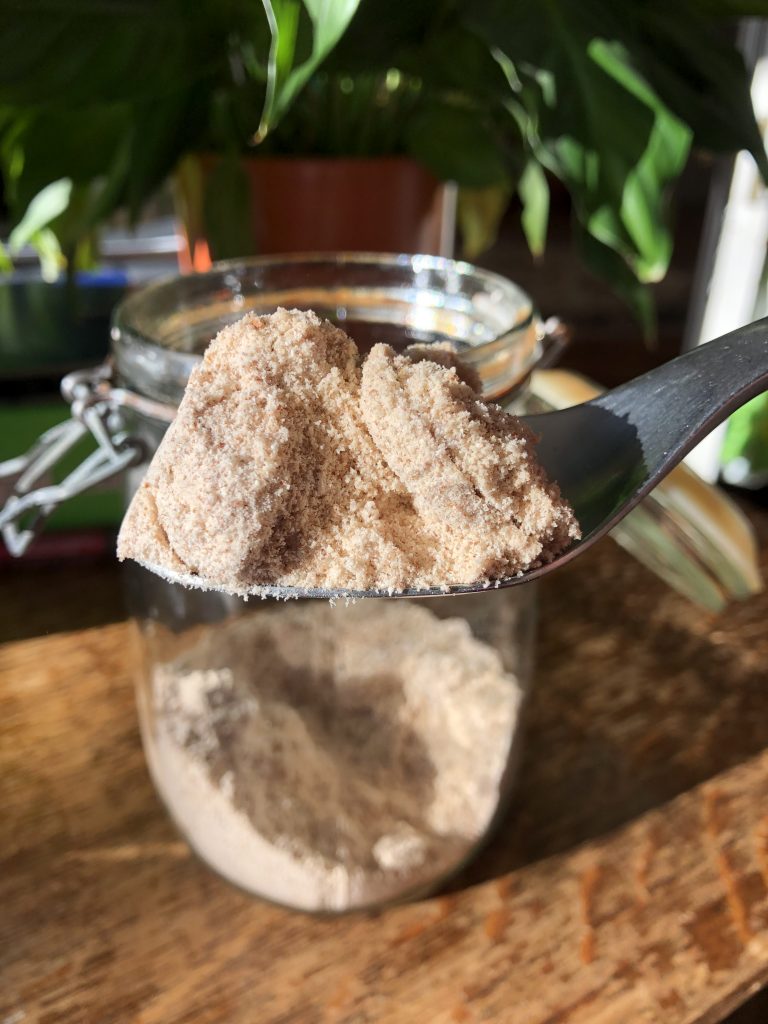
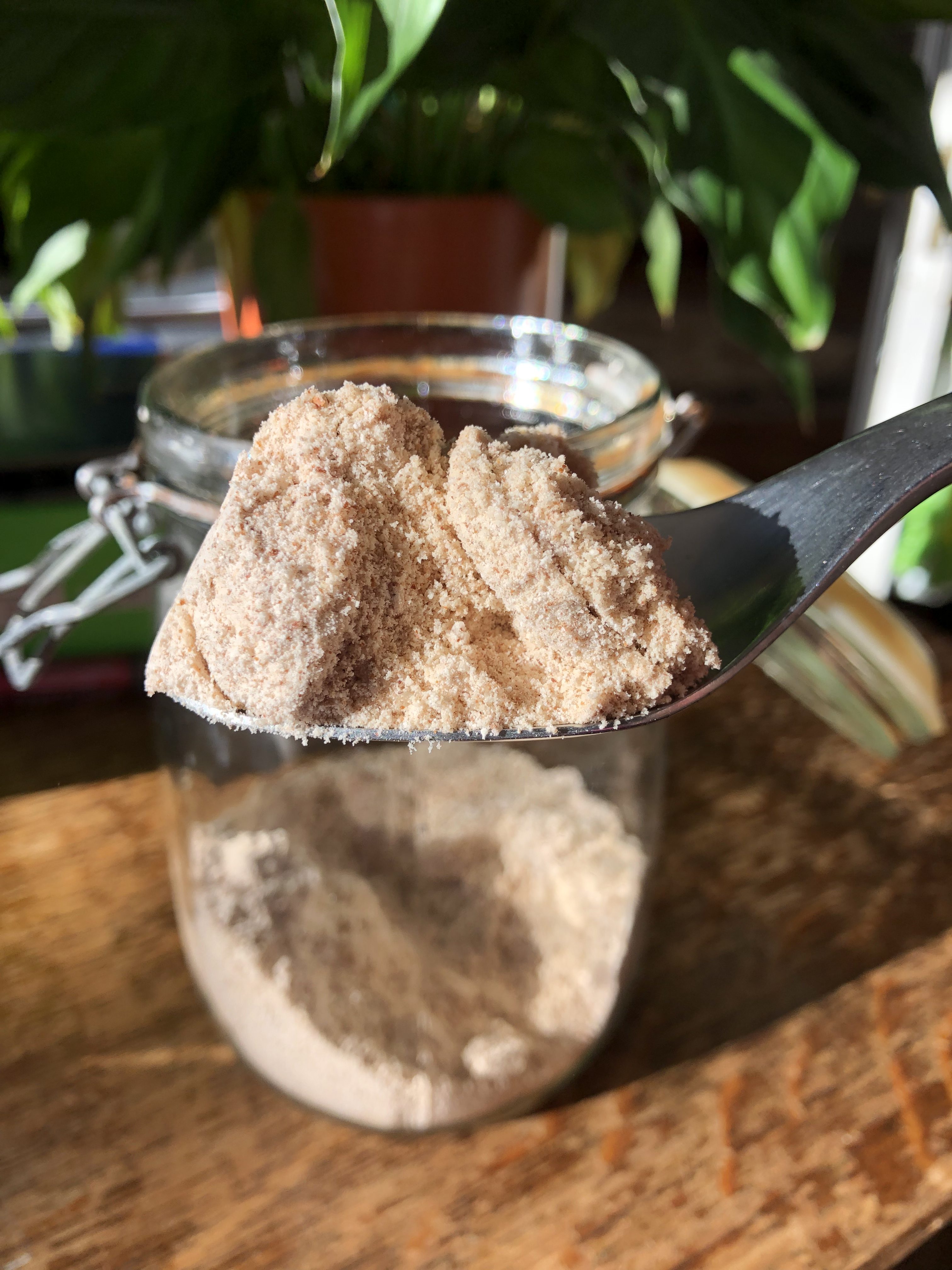
    9. Use for baking – it’s particularly good used alone in fruit crumbles, shortbread biscuits or heavier cakes such as banana or carrot cake. I also use 100g blended with 500g of strong bread flour (rye, spelt etc) to make a dense, moist loaf of bread.Spoonful of homemade gluten free wholemeal flour

    [author image=”https://strippedbarefashion.com/wp-content/uploads/2018/04/Kate-Harcourt.png” ]Kate Harcourt is the Editor of Stripped bare fashion. She is also a freelance journalist specialising in ethical fashion, women’s issues and interiors. Her opinion pieces have been featured in local and international press and a small collection now appear in Don’t bother asking. As the single mother of six children, with a passion for healthy vegan and vegetarian food, she inevitably ends up spending a lot of time in the kitchen! Some of her simple, wholesome recipes are here: Stripped bare food. Kate loves to hear from potential collaborators or brands keen to promote their ethical products and services. Media information is here, or contact Kate via email: kate@strippedbarefashion.com[/author]