Category: What we’re talking about…

Latest blog posts on ethical fashion and women’s issues

  • Struggling to be ethical

    Struggling to be ethical

    Well, I am trying to be, but sometimes it’s so frustrating to see something that you really believe in making such slow progress. I’m talking about our ethical clothing campaign.

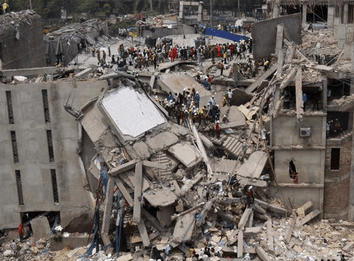
    I guess that I expected the rest of the world to have the same reaction as I did when I saw the Rana Plaza collapse: Shock, sorrow, guilt… I had vaguely assumed that sweatshops were just something in Nike’s shady past. Nike and other “sweatshop brands” had been shamed out of their grubby profiteering decades ago, hadn’t they? Despite my lifelong boycott of Nike (I bear grudges) the thought of sweatshops hadn’t crossed my mind in ages. But images of the Bangladeshi wreckage brought it into eyebulging focus. This kind of treatment of unlucky humans by lucky humans is unforgivable, and definitely not something I, or my fellow lucky-country citizens would ever want to be a part of. Am I right?

    So why hasn’t there been a global call to end sweatshops? Why no universal outrage at the plight of our fellow humans? It seems we only care about poverty and suffering if we can point the finger of blame in someone else’s direction. Meantime we turn a blind eye to the fact that people are enslaved to meet our own demands for cheap, disposable fashion.

    I feel like we are just drifting obliviously towards forgetting about the Rana Plaza collapse. I feel we are pretending that it’s all been fixed up by token efforts and half measures, like The Accord. It hasn’t. It’s hard.

    I admit, I have wavered in my own commitment to shop ethically. There was the time I took a princess costume to the checkout of my local Disney shop and asked whether their clothes were made in sweatshops, to which the sales assistant replied, “Probably”. Flanked by my two daughters who were wide-eyed with embarrassment and watched by every customer in earshot I said, “I’m sorry to hear that” and left.

    There was the time I had to buy a Christmas hat for my son, and was tempted to pick one up from the pound shop – so quick, easy and cheap! – but chose in the end to blink back my tiredness and stitch one up late at night.

    There was the time I fell in love with a pair of uber-flattering Karen Millen jeans, and didn’t even want to ask the sales assistant about their provenance for fear of bad news… which it was. Even at that point I struggled with my commitment! It’s not “nice” to make a fuss, is it? And my desire to be friendly and non-confrontational is almost as strong as my desire to make a stand for all those women and children locked up in sweatshops! But you’ll be pleased to know I walked out of the shop empty handed.

    And there was the time my daughter showed me her own heartbreaking and heartbroken letter to Build-A-Bear in which she asked if their goodies are “made in sweatshops, or by other children who put their lives in danger and miss out on school to make fun toys for the lucky children”. No reply came. I was tempted to tell her I was sure her beloved BAB’s were ethically produced, but it would have been a lie.

    At other times, I know I have steamrolled people who have raised objections to my ethical clothing commitment. I oscillate between outrage and heartbreak when I feel like my fellow humans are being inhumane.

    “But all those people would have NO work if they didn’t have sweatshop work” – No, they could have the same work, they could just do it in a safe work environment and earn enough money to live on.

    “They’re used to living and working like that” – They’re people! They’re human! And even if they are used to it, that doesn’t make it ok. Some sexually abused children are probably used to being abused… doesn’t make it ok!!

    “Why don’t they do something about it themselves?” – Because they are unimaginably poor, powerless, vulnerable and fearful. If we don’t speak up for them, nobody will.

    “I can’t afford it” – this one breaks my heart. Of course, there are people whose financial situation dictates that they can only buy the very cheapest clothing available, but generally speaking it’s an easy euphemism for “I’d rather spend my money on something else”. There I said it. Hang me out to dry, but it is a matter of priorities, not money. I just can’t imagine justifying “I can’t afford it” to a sweatshop worker. Imagine a woman, just like you and me, who works 18 hour days, who is bullied and most likely subjected to physical, verbal or sexual abuse by her employer, who is exposed to toxic chemicals and made to use dangerous machinery, who is forbidden from drink or toilet breaks, who is fined if production quotas aren’t reached and has no recourse to improve her conditions… and at the end of the day goes home to her slum with meagre rations of food for her children, who have been looking after themselves all day. Imagine telling this woman, “I can’t afford it”.

    But the absolute worst – and increasingly common – response I get if I try to discuss ethical clothing is smiling, head-nodding apathy. You can’t combat apathy.

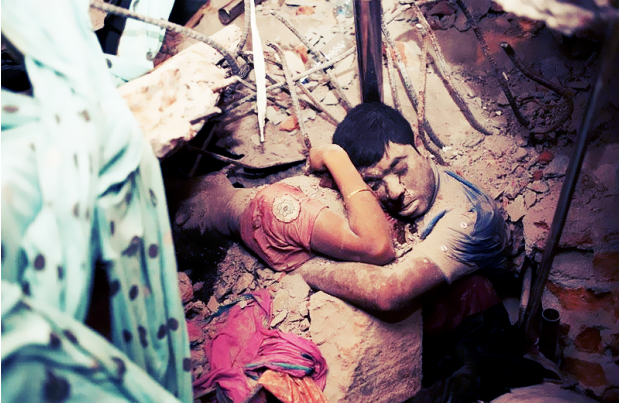
    Just when I was beginning to wonder whether campaigning for ethical clothing would ever be anything more than pointless, I stumbled across an article on ThreadGently: This is the real cost of fast fashion. Never again? The article featured a close up image of a parent and child clinging together – dead – in the rubble of the Rana Plaza. The memory of the image still prickles my skin. If I’d known it was there I wouldn’t have looked. But I saw it and it gave me what I needed: impetus.

    There may not be universal outrage over sweatshops yet, but there are like minds, a conversation has started and progress is being made. These are the small mercies, and I am grateful for them.

    There are other things to be grateful for too, like the moments of relief – almost triumph!- when friends have said they support ethical shopping too, or proudly showed me an item of clothing they chose after reading something on my website.

    I was grateful after I piped up in our school committee meeting, hoping I could introduce the idea of ethically produced school uniforms, only to discover that we already have them! Yay! I was grateful having asked about including a commitment to an ethically produced uniform for my daughter’s netball club and the idea was met with enthusiasm! Yippee!

    I’ve had the fun of discovering brands who deliver delicious, original clothing and whose integrity in their dealings all along their supply chains is humbling. That’s something to be grateful for. And of course I am always grateful to our lovely readers who read, leave comments and email their support to me. Seriously, three cheers to you guys…

    And in becoming acquainted with sweatshop-free brands, I have learned that many also promote their environmental credentials and use real life models. This is fashion that is eco-friendly, ethically made and free from gender stereotyping. HOOFUCKINGRAY!

    So, if you, like me have been touched in any way by the plight of the people who died in Rana Plaza or by the knowledge that there are hundreds of thousands of other nameless, faceless workers still being abused on our behalf, I urge you too to keep talking and keep shopping (ethically!). Don’t give up.

    x Kate

    PS I will never knowingly buy clothing that is made in sweatshops again. Again.


    Originally published on diamondsanddaisychains.com
  • Arguing with M&S: Fashion Revolution Day 2014

    Arguing with M&S: Fashion Revolution Day 2014

    This is exactly why we need to have labels on our clothing which tell us whether the people who made each garment worked in a safe environment and were paid a living wage:


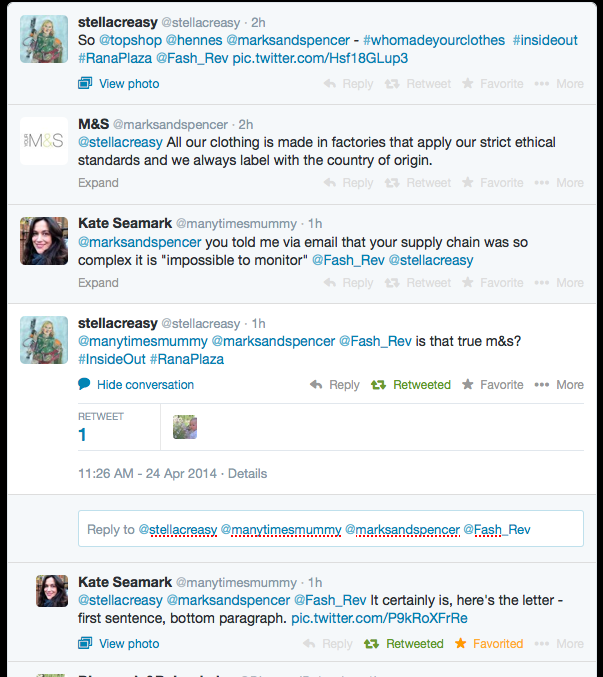
    On Fashion Revolution Day, the anniversary of the deaths of 1133 people in the now-notorious sweatshop, Rana Plaza, Labour MP Stella Creasy asked H&M, Topshop and M&S who made your clothes? H&M and Topshop chose to stay schtum. (If you can’t say something nice, don’t say anything at all, right guys??)

    M&S took the other classic High Street fashion retailer approach and tried to get warm and fuzzy: All our clothing is made in factories that apply our strict ethical standards and we always label with the country of origin. Not just any old ethical standards, strict ones, no less! The only problem is that a few months ago, I also asked them about their ethical standards and spent quite some time reading through the documents they sent me in response. And although they were/ are quick to reassure consumers that they are fashion good guys, they don’t pay living wages or ensure safe working conditions. They told me so back in January. Amongst other things they said:

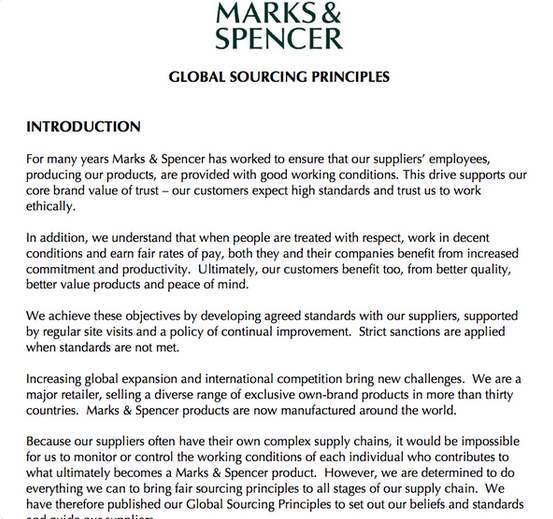
    “Because our suppliers often have their own complex supply chains, it would be impossible for us to monitor or control the working conditions of each individual who contributes to what ultimately becomes a Marks & Spencer product.”

    But getting back to the Twitter conversation on Fashion Revolution Day… there I am sitting at my computer seeing M&S crowing about their “strict ethical standards”, and remembering that they told me their supply chain is impossible to monitor… so, I piped up with my two bob’s worth: you told me via email that your supply chain was so complex it is “impossible to monitor”

    At that point M&S chose to follow H&M and Topshop’s strategy. They went silent.

    Stella Creasy asked: is that true m&s? Their answer? Yep, more silence.

    Now, in 2019, it’s taken me ages to trawl through my documents and find that letter… my Tweet doesn’t seem to be there any more, the original article on Diamonds and Daisychains is long gone and the email I received from which I quote M&S as saying their supply chain is “impossible to monitor” has a broken link to the letter. BUT… I found an old screenshot, took a new screenshot, and here it is (bottom paragraph, first two lines):

    And that, my friends is why we need clothing labels which clearly indicate whether workers all along the fashion supply chain are paid living wages and work in safe conditions: If fashion retailers were required to label their clothing in this way they couldn’t just go silent and not tell us how they make our clothes.

    • Consumers deserve the right to tell quickly and easily, at the point of sale, if clothes were made in sweatshops.
    • At present, fashion retailers are under no obligation to tell us how our clothes are made.
    • We know from incidents like Tazreen and Rana Plaza that severe human rights abuses occur in our name when fashion retailers don’t have to be transparent about their supply chain.

    We know more about the chickens that lay our eggs than the people who sew our clothes.

    That’s not ok.


    Originally published on diamondsanddaisychains.com
  • Going to Brussells

    Going to Brussells

    This is the first update on the progress of our petition calling for mandatory clothing labels which indicate the working conditions of the people who made them.

    If you’d like to sign the petition, it’s here: ***No it’s not any more! PETITION NOW CLOSED

    Exciting news! Our voices have been heard!

    I have been invited to go to Brussels to attend The Hands That Sew Your Shirt and propose working condition clothing labels to the European Commission.

    This would not have happened without your early support of this petition. THANK YOU.

    The next step is to start a European Citizen’s Initiative (ECI) which I will start work on when I get back from Brussels. This is a massive task and involves setting up a committee with representatives from 7 EU states, then getting 1 million signatures on the petition. Yes, 1 million!! And we can do it.

    Green MEP Keith Taylor has offered his support with this campaign following his successful involvement with the ECI calling for an eight hour limit on live animal transport. I will also be building a network of non-government organizations such as the Clean Clothes Campaign, Labout Behind the Label and Care International, to help drive the campaign forward through their own channels.

    In the meantime, we need to keep spreading the word. It’s truly outrageous that the fashion industry won’t come clean about their use of sweatshop slavery. 8 million people in Bangladesh alone work in garment manufacture. And while the European Commission’s own 2013 study revealed that 84% of EU consumers care about how their clothes are made, fashion retailers are under no legal obligation to provide this information.

    We know about the conditions of the chickens that lay our eggs, it’s time we knew about the working conditions of the people who make our clothes.

    Thank you again for your involvement. Please continue to share the petition on all your social networks and via email. Invite people to sign. We’ve had success already with 300 signatures, imagine if we each got just one more person to sign and had double the signatories by next week.

    This is just the beginning of a long campaign and there’s a big job ahead. But together we are being the change we want to see in the world… and it’s very exciting.

    Kate


    This was originally published on diamondsanddaisychains.com
  • Call for ethical fashion labels

    Call for ethical fashion labels

    Hello!

    I’ve started the petition “European Parliament: Enforce mandatory labelling of clothing which states the work conditions of the people who make them. eg Fairtrade, SA8000, unregulated etc.” and need your help to get it off the ground.

    Will you take 30 seconds to sign it right now? Here’s the link:

    http://www.change.org/en-GB/petitions/european-parliament-enforce-mandatory-labelling-of-clothing-which-states-the-work-conditions-of-the-people-who-make-them-eg-fairtrade-sa8000-unregulated-etc

    Here’s why it’s important:

    This is important because consumers are currently unable to easily differentiate between clothing that is made under ethical circumstances, where workers are paid a living wage and work in a safe environment, and clothing that is made by people who are exploited, abused, unfairly paid, overworked, exposed to hazardous chemicals and unable to form a collective.

    This recent documentary exposed ongoing violence and abuse in a Bangladeshi sweatshop – these conditions are common throughout the garment manufacturing industry. http://www.itv.com/news/2014-02-06/exposure-rana-plaza-bangladesh-garment-factory-conditions/

    We label our eggs “free range” or “caged” so consumers can make an informed choice about what they’re buying, we need to do the same with our clothes.

    Garment industry workers who work in sweatshops are slaves. They have no power to improve their circumstances and often no alternative employment.

    Fashion should be fun and fair. Our desire to look good should not result in vulnerable people in the third world being forced into enduring poverty, unsafe work environments and pay which isn’t enough to live on.

    Please support this petition to make a stand for the nameless, faceless people (mainly women and children) who are trapped in exploitative garment manufacturing work.

    Please support this petition so that High Street retailers are unable to continue using sweatshops and being deliberately ambiguous about their ethical standards.

    Please support this petition for the people who died in Rana Plaza, those who died in Tazreen, those who died in Garib & Garib, and those who died in smaller, unreported tragedies.

    You can sign my petition by clicking here.

    Thanks!


    Post originally published on diamondsanddaisychains.com

  • European Citizen’s Initiative (ECI)

    European Citizen’s Initiative (ECI)

    I am writing to you to ask for your support and assistance with a European Citizens’ Initiative (ECI) calling for mandatory clothing labels which reflect the working conditions of the people who make each garment.

    At present I need to create a Committee with representatives from 7 member states, and am wondering of you would be willing to be on the Committee. I will attempt to undertake as much of the administrative work myself, but need help with publicity and promotion.

    My online petition on Change.org has over 400 signatures just from publicity on my website, and my local newspaper recently featured an article about me and the campaign. The petition has also had support and promotion from a number of ethical fashion bloggers including Ms Wanda’s Wardrobe, Style Is… and Miss Beau Bangles. Greens MEP Keith Taylor has also offered his support following his involvement with the ECI calling for an 8 hour limit to live animal transport, which reached 1.1 million signatures.

    With the anniversary of the Rana Plaza collapse I am hoping there will be renewed interest in ethical clothing manufacture.[divider]

    Please find an outline of the proposed ECI below:

    An ECI is an invitation to the European Commission to propose legislation on matters where the EU has competence to legislate. It has to be backed by at least one million EU citizens, coming from at least 7 out of the 28 member states. A minimum number of signatories is required in each of those 7 member states.

    The rules and procedures governing the citizens’ initiative are set out in an EU Regulation adopted by the European Parliament and the Council of the European Union in February 2011.

    No ECI addressing this issue has yet been registered.

    Before I can start collecting statements of support from citizens, I have to register the ECI. This involves providing the following information:

    • the title of the proposed citizens’ initiative: Living wage clothes labels
    • the subject-matter: Mandatory clothing labels which indicate to consumers whether the garment workers who made the item were paid a living wage
    • the objectives of the proposed citizens’ initiative on which the Commission is invited to act:
    1. to create legislation which enforces mandatory labelling of each individual garment sold within the EU. Labels would inform consumers whether the factory in which their item of clothing was made pays their workers a living wage. (Consumers cannot currently differentiate between clothing made in sweatshops and clothing made in factories where living wages are paid, and clothing retailers are under no obligation to provide this information);
    2. to educate and inform consumers about the provenance of their clothing;
    3. to give consumers a choice whether they buy clothing made in sweatshops.
    • the provisions of the Treaties considered relevant by the organisers for the proposed action: Living wage clothes labels satisfy Article 169 which states that EU consumer policy priorities include promoting citizens’ rights to information and education.
    • personal details of the 7 required committee members (full names, postal addresses, nationalities and dates of birth), indicating specifically the representative and his/her substitute as well as their e-mail addresses and telephone numbers: I am currently seeking committee members.
    • documents that prove the full names, postal addresses, nationalities and dates of birth of each of the 7 members of the citizens’ committee: I am currently seeking committee members.
    • all sources of funding and support for the proposed citizens’ initiative (known at the time of registration) worth more than €500 per year and per sponsor: The ECI helpdesk recommends securing €100,000 before launch to cover staff, translation, office equipment, online services, signature collection, advertising, printing, phones and postage. I am currently a self-funded individual, willing to work on a voluntary basis and absorb my own costs. I hope to avoid incurring excess costs by involving NGO’s and other support groups who are willing to donate their time and services.

    There is also the option to provide:

    • the address of a website for the proposed initiative
    • an annex (maximum 5 MB) with more detailed information on the subject, objectives and background to the proposed citizens’ initiative
    • a draft legal act (maximum 5 MB).

    I am keen to develop these items with help and advice from other committee members, but have not done so yet. I do, however run an ethical clothing campaign through my website, Diamondsanddaisychains.com and could provide a section there for the ECI. Having looked at a number of current open initiatives, I feel a website, annex and draft legislation would add value and interest.[divider]

    I would love to hear your feedback on the ECI and whether you are interested in being on the Committee. It would also be very helpful to know if there are other NGO’s you would be prepared to work with if I were to approach them for support.

    Regards

    Kate Seamark


    Originally published on diamondsanddaisychains.com
  • Answers to “Just a simple yes or no, please?”

    Answers to “Just a simple yes or no, please?”

    Do you ensure that all workers along your supply chain are paid fairly and have decent working conditions?

    My post,  Just a simple Yes or No, please? was published online and emailed or sent via each company’s website to the following companies:

    Anthropologie, Baukjen, Cox & Cox, H&M, JoJo Maman Bebe, Joules, La Redoute, Me+Em, Pure Collection, Radley, Sweaty Betty, The White Company, White Stuff, Wrap London

    These are their responses in alphabetical order:

    Anthropologie

    As of September 24th, 2013, no response has been received.


    Baukjen

    We can proudly say yes for our manufacturing bases. Baukjen and Isabella Oliver are two brands which are owned and managed by a husband and wife team who believe strongly in family values. This belief extends not only to the way we treat our teams in our Head Office and the Warehouse/Distribution Centre in the UK, but to the skilled workers at the factories that we choose to produce our product in.

    Our in house design and production team controls 100% of our own brand product which we produce directly with our portfolio of factories. Over 80% of our product is made in independent and family run factories in Portugal, the remainder are produced in independent factories in Turkey and China.  We have worked hard to build solid and trustworthy working relationships with all our factories, some of which we have used since Isabella Oliver began ten years ago.  Our production team regularly visit factories and work closely with them to ensure that we have great product, at a competitive price.

    All of our factories comply with our internal Corporate and Social Responsibility guidelines which are based on global Ethical Trading Initiatives; they are also externally audited by independent companies who are specialists in the field who ensure that the factories comply with international and local laws.

    Our production team do try to visit our raw materials suppliers where possible for fabrics and trims, however due to the complex and exhaustive nature of these it is impossible for such a small and dedicated team to ensure that they also comply with our stringent policies and views without passing these extra costs onto our customers.

    We aim to ensure by our visits and external audits of our manufacturing sites that health and safety requirements are met, working conditions are fair and ensure that no child labour is used and that factories do not employ excessive and forced over time; that the factories comply with fair pay which is equal or greater than the local government minimum standards.  We also audit factory living conditions where applicable for our Far East factories, and also try to ensure that the factories do not discriminate on race, caste, national origin, religion, age, disability, gender, marital status, sexual orientation, union membership or political affiliation. We do not allow any harsh or inhumane treatment of any worker.

    We also run a scheme to reduce our carbon footprint so our samples and unwanted garments do not go to landfill, but instead are recycled to raise funds for Cancer Research.

    We hope that this answers your question fully, if you require any further information please do not hesitate to contact us on TheGirls@IsabellaOliver.com


    Cox & Cox

    As of September 24th, 2013, no response has been received.


    H&M

    As of September 24th, 2013, no response has been received.


    JoJo Maman Bebe – Mel Brown, Design & Production Director

    The simple answer to your question is Yes, but there is a more complicated answer.

    We have an extensive policy on sourcing our own brand items and a comprehensive audit covering standards that must be met by our suppliers – but it is very difficult in manufacturing to be 100 percent sure that these standards are met all the time and throughout the supply chain.

    Our audits are based on the Ethical Trading Initiative which is a good internationally agreed standard to base from. This means, amongst many things, that minimum wages are met, child labour is not used, health and safety in the workplace is adequate etc.

    However we believe that not only must these factories tick all the boxes but that we must build a relationship and trust between us and that we deal with each other in an ethical manner. Moreover we try to work with suppliers that we believe are ethical and fair in their businesses as that cascades down.

    We work primarily, but not exclusively, with family run factories around the world. Many of our relationships go back 10 to 15 years and we work with factories to improve their quality and processes over time. We do not jump ship for the cheapest price but work hard to find solutions with our factories to increased pressures on costs.  We visit our factories as often as we can, but with a small team and a very wide range of products necessitating a wide variety of factories we can’t get to all of them as often as we would like. Hence it is important for us to trust the people we work with.

    What we cannot give assurances on to the same level are the components further down the supply chain – for example the factory that makes the elastic that goes into a waistband. We try to ensure that key suppliers to our suppliers are audited but we cannot reach every part of the supply chain without a massive increase in manpower and therefore cost which we don’t feel our customers can stretch too.

    We are quite unusual in that we go direct to our factories for about 90% of what we make, and always have done, which means we do have the personal relationship it takes to have trust in our suppliers.

    That is a very brief summary of where we stand.

    We don’t claim to be perfect but we work very hard to ensure we can stand behind our product proudly and feel confident in how and where it was made.


    Joules

    As of September 24th, 2013, no response has been received.


    La Redoute

    As of September 24th, 2013, no response has been received.


    Me+Em – Charlie Cornish, Customer Services Manager

    Thank you for your email.
    We really appreciate your concerns on the environmental sourcing of our products and the well being of those who manufacture our garments and fabric.
    We are currently in the process of clarifying our CSR position, as we wish to make this as accurate and transparent as possible for our customers, who expect as high a level of ethical sourcing as yourself and your readership.
    Please find attached our current corporate social policy; please do not hesitate to contact me if I can help with any further queries.

    Corporate Social Responsbility

    At ME+EM we are committed to doing our bit for the environment.

    Climate
    –  Where possible we source fabrics that wash well at 30’c.
    –  Washing at 30’c rather than 60’c means you use a third less electricity (Source Energy SavingTrust).
    Waste
    –  Whilst we do use FSC approved tissue paper with our packaging, we keep this to a minimum.
    –  All our cardboard boxes are made from recycled materials. We only print a minimum run of
    brochures and where possible use the e-mail to communicate with our customers.
    –  The polybag we use to send out orders is resealable (meaning you can use it more than once)
    and is comprised of a percentage of recycled materials.
    Fair Partner

    –  Our current range is sourced in Portugal, where we use an OEKO-TEX® certified manufacturer that is committed to providing high quality production whilst ensuring that there is a comprehensive benefit scheme in place for all its employees. We have visited the factory to see for ourselves the environment in which they work and met many of the team that work on ME+EM.
    –  All factories used in the production of our paper products (boxes, bags, and tissue paper) are ISO approved so everyone is paid fairly and over 18yrs old.
    Sourcing
    –  All the paper used in our boxes and tissue paper is sourced from sustainable forests (ie for every tree used another one is planted).
    –  We do not currently source fair trade cotton but are investigating this for our next range.
    –  We are also investigating sourcing fabric closer to the point of manufacturing and to delivery inorder to cut down on airport freight.
    Community
    –  We are committed to providing ME+EM clothes for charitable events to use as prizes.
    –  To date we have worked with the FSID – Study of Infant Deaths foundation, Macmillan CancerSupport, The Warwickshire Hospice, Treehouse, Ambitious for Autism and Starlight.
    –  We intend to find a charity we can work with on an ongoing basis, to provide both our time andclothing where appropriate.
    We will continue to build on commitments and welcome any suggestions from our customers on what more we could be doing. Please email us at enquiries@meandem.com

    Pure Collection – Rosalind Whitley

    Thank you for your email and for taking the time to write to us about your concerns regarding ethical working conditions.

    Please be assured that we take this very seriously and we will shortly be providing further information on our website about our ethics, our commitment to sustainability as well as human and animal welfare during the production processes.

    I can confirm that whilst we are not presently a member of the Fair Labour Association, we can re-assure you that that at Pure Collection we work in close partnership with our suppliers and do our utmost to ensure conditions are of an appropriate standard.

    Thank you again for providing us with your feedback, and for raising this important issue with us. We will of course ensure that your comments are passed to the management team, who I know will also find your feedback extremely valuable and useful.


    Radley – Radley Customer Care

    Many thanks for your email.

    Please be advised that many of our goods are manufactured in India and China where we maintain strict and ethical codes of conduct with our suppliers.

    We have worked with most of our suppliers for many years and have built respectful and close working relationships with them. Our British design team visit our suppliers on a regular basis to work side by side with them in the development of our products. Our key suppliers have been, and continue to be, instrumental in our development process and play an integral part in our company’s success.

    For more information on our products, company values, and code of conduct please visit our company website www.radley.co.uk

    If you need any further assistance, please don’t hesitate to get in touch with us again.


    Sweaty Betty


    The White Company – Ellie King, The White Company Customer Service Team

    Thank you for your email and I am delighted to hear your enjoyed looking through our Autumn brochure.

    In regards to your comments about the working conditions of the people we employ to produce our products I would like to direct you to the corporate social responsibility page on our website;

    http://www.thewhitecompany.com/help/ethics/

    I would like to reassure you at The White Company we are members of the Ethical Trading Initiative and are committed to protecting workers rights.

    I hope that you are able to find all the requested information from this page and if you do have any further questions please do not hesitate to contact me and I will try my hardest to source the answers for you.


    White Stuff – Julia Sugden:

    Thank you for getting in touch with us. We take all concerns about Corporate Social Responsibility very seriously, as it’s something we really care about at White Stuff. We work with one factory in Bangladesh, which has been fully audited in line with our Ethical Code of Conduct. None of our garments are produced by the factories so sadly affected by the recent disaster in the country.

    All suppliers who join the White Stuff Family must sign up to our Ethical Code of Conduct before we do business with them. Our code covers all aspects of Health and Safety and Labour and Wage which is based on eight codes:

    ·         General principle

    ·         Non Discrimination

    ·         Forced Labour

    ·         Child Labour

    ·         Wages and Hours

    ·         Working conditions

    ·         Environment

    ·         Freedom of Association

    Each of our factories must demonstrate compliance to our Code when requested through our audit programme.

    As our supplier relationships are important to us, we’ve also thought creatively about practical ways to support workers and their families. Our ‘Made for Change’ charity bags have been sold in shops and online to raise money for children’s scholarships in India. Since 2012, we’ve funded over 330 children’s scholarships, which cover school fees, uniforms, educational materials and exam fees.

    We are always looking to evolve our commitment through CSR and will continue to update our website with more details of what we’ve been up to and what we’d like to achieve in the longer term.


    Wrap London – Vicci Hallam, Wrap Customer Care:

    Thank you for contacting us and I fully understand your concerns. We source garments and accessories from a number of countries, our leather jackets are made in Italy, Sendra boots are from Spain and some of our jewellery is designed and made in the UK. The majority of garments are manufactured in Hong Kong, India, China and Portugal and our Managing Director personally visits all our main suppliers at least twice a year. We have continued to work with the suppliers who supported us at launch and in most cases the MD is a personal friend of the owners. Our partners are also small sized businesses that are often family owned. Their factories are all well run, professional organisations with good labour relations and they do not use child labour. We do not design and manufacture for the cheaper, high volume, low price end of the market, all our clothes are manufactured in well-established factories that produce beautifully made, high quality garments in limited quantities.


    Ad endum, no further responses or updates from any of the above listed companies were ever received…

    Originally published on diamondsanddaisychains.com

  • Just a simple yes or no, please?

    Just a simple yes or no, please?

    I receive clothing catalogues through my letterbox nearly every day of the year. Some I have requested. Most I have absolutely no idea where they got my name and address from. This is my AW13 response, sent to the following retailers:

    Anthropologie, Baukjen, Cox & Cox, H&M, JoJo Maman Bebe, Joules, La Redoute, Me+Em, Pure Collection, Radley, Sweaty Betty, The White Company, White Stuff, Wrap London


    Dear clothing retailer

    Thank you for sending me your latest catalogue, packed with lovely looking goodies for Autumn/ Winter 13. As well as shopping for myself, I also have a husband and six fashion conscious children to clothe, ranging in age from 19 years, to 10 months. As you can imagine, we buy a lot of clothes!!

    However, since the Rana Plaza collapse in Bangladesh, I find myself in possession of a burning social conscience. Before I spend a single penny I need to redress my clothes shopping habits.

    I simply cannot continue to be a mindless consumer, who ignores the awful lives – and sometimes awful deaths – of vulnerable, impoverished, powerless people.

    If I were in their position I would find it outrageous that others could happily exploit my powerlessness for their own sartorial self indulgence and vanity on the cheap.

    To this end I am writing to you.

    I would like to know about the provenance of your clothing.

    Personally, I will be going out of my way to support brands which are clear about their environmental credentials and promote the wellbeing and fair treatment of workers throughout their supply chain.

    As a journalist, I am also writing about my experience and sharing what I discover with the readers of online magazine Diamonds and Daisychains. A lot of our readers – mainstream, middleclass women – have shown interest in ethical clothing lately, though they have found it very hard to get clear information on whether particular labels use sweatshops or not… some brands like to make it complicated with long documents written in legal jargon which basically amount to a commitment to have good intentions so long as they’re a marketable commodity. This is not what we’re looking for!

    Other brands provide clear statements such as “All the people who work in our factories are over 19 years old, and they all receive a fair, fixed salary for their hard work and work decent hours.” We like that.

    I would really appreciate it if you would let me know about your brand and your ethics:

    Do you ensure that all workers along your supply chain are paid fairly and have decent working conditions?

    Just a simple yes or no would be brilliant, though if you want to mention additional great things your company does, we’d love to hear about them too!

    I will be publishing this letter together with the responses I receive.

    Last but not least, if you are unwilling to answer my question, please remove me from your mailing list.

    Regards

    Kate Seamark

    Editor

    Diamonds and Daisychains

    ___

    Originally published on diamondsanddaisychains.com
  • This has to change

    This has to change

    My petition is here: (2019 – link non longer works) Please, join me in speaking up for a group of people who otherwise have no voice.

    Taslima Akhter’s award winning image taken in the rubble of the collapsed Rana Plaza.

    Unregulated factories are known as sweatshops. In sweatshops, torturous working conditions continue. Workers (mainly women and children) work 12+ hour days for as little as £20 per month, and are routinely subjected to violence, sexual and verbal abuse, toxic chemicals and dangerous machinery. They are likely to have no proper toilet facilities, no access to ventilation or water, no power to negotiate better working conditions and no alternative employment.

    If those unregulated factories paid their workers double the current rate per garment, it would only constitute a rise in overall cost to you and me of around 2%, so a £10 garment would cost £10.20 instead. We could still buy affordable clothes, and the people who make them could afford food, housing, education for their children, and even a little disposable income.

    See designer and ethical fashion advocate Katharine Hamnett and journalist Tansy Hoskins discussing how little has changed since the Rana Plaza collapse on BBC Breakfast.

    In a separate interview, following the screening on ITV of Fashion Factories Undercover, Ms Hamnett described fashion as “a stinking business” and said our clothing is “covered in blood”.

    It seems absurd to me that we can tell whether the chickens that laid our eggs are freerange or caged, but we cannot tell if our clothing is made in sweatshops.

    I want to know if the clothes I buy for myself and my children has come at a huge personal cost to another woman (or man) and her children on the other side of the world. I want clothing clearly labelled.

    I am writing to ask you to add your name to my petition and to share it with your friends. It doesn’t matter if you’re not in Europe, your signature will still make a difference.

    It would be amazing to get a big, public conversation started about the people who make our clothes. It would be amazing to have your support to make sure that they are safe and fairly paid.

    x Kate


    Originally published on diamondsanddaisychains.com